The January Hangover Just Got a Lot Worse Due to Post-Holiday Chargebacks
For many eCommerce merchants, the six weeks between Thanksgiving and New Year’s Day is the busiest time of the year.
According to Adobe, holiday shoppers are projected to spend more than $253 billion between November and December 2025. If the holiday season is merry for your top line, that’s undoubtedly good news. But, don’t celebrate just yet. Once the new year ends and the post-holiday “shopping hangover” sets in, you could be in for a rude awakening.
January and February is often peak season for chargebacks. That’s because buyer’s remorse and the reality of tight budgets often outlast the momentary dopamine hits from holiday season retail therapy, causing many shoppers to resort to friendly fraud and return abuse to “afford” (read: get out of paying for) their hefty fourth quarter purchases.
To make matters worse, more holiday purchases are being reversed than ever before. In 2024, shoppers returned $122 billion worth of holiday merchandise; up 28% from the year before. Given that this year’s sales figures are expected to shatter records, it’s reasonable to expect that the imminent chargeback season could also be record-breakingly bad.
Recommended reading
- Chargeback Protection: What are Your Options for 2026?
- Visa Compelling Evidence 3.0: New Dispute Rules for 2026
- What are Chargeback Alerts? The Merchant's Guide for 2026
- Troubleshooting Statement Descriptors: A 2026 Guide
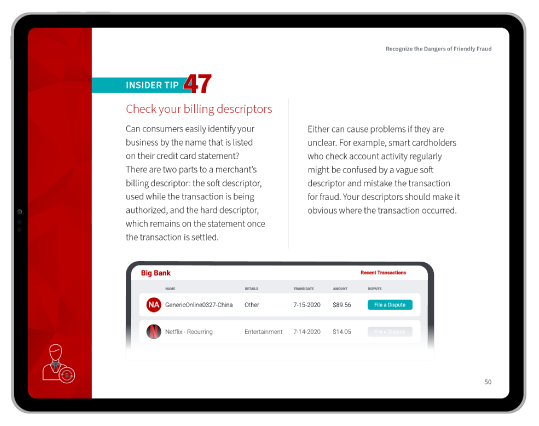
- 10 Simple Strategies to Optimize Your Statement Descriptor
- How to Test Your Statement Descriptors
Three Forces Making 2025 the Perfect Storm
Economic pressure, fraud “education” spread on social media, and ease of use will exacerbate chargeback problems immediately following this year’s holidays.
Thanks to economic pressure, the ease of committing fraud, and a holiday shopping season that’s shaping up to break records, the January hangover could shape up to be the worst post-holiday chargeback season on record. Here is why this year is different:
There are signs that the macroeconomic environment is deteriorating. Thanks to federal layoffs, tariff troubles, and tech industry downsizing, the national unemployment rate has risen by 0.5 percentage points within the last six months.
With job loss and recession fears looming large, consumers are feeling the pinch. On the contrary, those who lack the discipline to rein in holiday spending may find friendly fraud tempting. That’s because disputes can help unethical buyers “afford” their hefty fourth-quarter purchases at the expense of buyers, effectively getting out of paying for items they’ve already received.
Making matters worse is the fact that friendly fraud is becoming a learned behavior. Platforms like TikTok and Reddit have let posters share “scam bibles” and tutorials that teach consumers how to manipulate the dispute process.
This so-called fraud “education” normalizes theft and creates a bandwagon effect, enticing and emboldening otherwise honest shoppers to dispute valid transactions because everyone else is seemingly doing it too.
The final nail in the coffin for merchants is that it’s become so easy for consumers to file chargebacks.
Mobile banking apps are designed for frictionless user experiences. There’s no inherent harm in that, but it becomes an issue when customers are able to dispute charges with just a few taps. Although this convenience is rooted in good intentions — to protect consumers from legitimate criminal activity — it is increasingly abused by friendly fraudsters.
When the Chargebacks Will Hit: Why Timing Matters
Chargebacks most commonly occur between 45 and 60 days after a transaction. This makes the period between mid-January and the end of February a hot time for chargebacks.
If you are planning a January vacation, you might want to reconsider. January and February are often the peak season for chargebacks, and you cannot afford to staff your team reactively.
For merchants, chargeback response deadlines are tight and unforgiving. Depending on the card network, you have between 20 and 45 days to respond to a dispute. Worse, missing a deadline results in an automatic loss.
Consider the time window set by card networks to be an upper-bound. Your acquiring bank will often set even tighter deadlines; in many cases, your response window may be less than a week. If you want to protect your revenue, you’ll need to act fast — time is running out.
The Real Cost: It's Not Just the Transaction Amount
Each chargeback means lost revenue, lost merchandise, added fees, and other ancillary costs that will impact merchant operations.
Chargebacks sting because they spell lost revenue. But, a sale that could have been is just the start. Every time a chargeback occurs, you face additional direct financial consequences, like lost inventory, representment costs, and chargeback fees.
Even those direct financial consequences are just the tip of the iceberg. When chargebacks happen, they shift your team’s focus towards firefighting and away from growth. Labor costs and implicit opportunity costs means tighter margins, dampened profitability, and more hassles for your team.
Tis the Season…for Chargebacks.
January & February are two of the most dangerous months for merchants. Click below to find out why.

Request a Demo
Besides, your acquirer will not take kindly to your heightened chargeback ratio. In response, they may impose higher credit card processing fees, require you to establish merchant account reserves or, in severe cases, even close your account and place you on the MATCH List.
All this is to say that there’s far more to chargeback costs than meets the eye. In fact, a study by LexisNexis Risk Solutions reveals that every dollar lost to friendly fraud ultimately costs US merchants $4.61 to identify, contain, resolve, and prevent.
Regardless of the ultimate outcome of the dispute, a chargeback fee is typically non-refundable. These fees can range from $20 to $100 per dispute…or even more if a chargeback advances to the pre-arbitration or arbitration stage.
What Actually Works to Prevent Post-Holiday Chargebacks
To prevent post-holiday chargebacks, you’ll need to take a focused, tactical approach. While you can’t stop every dispute, you can significantly lower your risk profile by curing key deficiencies that lead to chargebacks. Consider:
When Basic Best Practices Aren’t Enough
Preventive measures are a good start. Unfortunately, manual defensive measures often fail under the volume and pressure of the holiday surge and subsequent chargeback tsunami.
To protect your revenue, you’ll need to complement standard measures with advanced tools that directly interact with and leverage card network data. This includes:
Chargeback alerts, such as Ethoca Alerts or Verifi CDRN, notify you the moment a customer initiates a dispute but before it becomes an official chargeback. This gives you a short window of time — typically 72 hours — to pre-emptively issue a refund so that the dispute has no chance of morphing into a chargeback.
While alerts cost between $15 and $40 per instance, this fee is significantly lower than the $20 to $100 cost of a formal chargeback, not to mention the associated damage to your chargeback ratio.
Tools like Verifi Order Insight and Ethoca Consumer Clarity provide detailed information about transactions that cannot be found on a bank statement alone.
By feeding data like item descriptions and merchant details into the issuer’s system, you can quell customer confusion and respond to cardholder queries before buyers decide to dispute unrecognized charges.
Not all chargebacks are worth fighting. A strategic approach involves focusing your resources on high-value disputes and cases where you have strong evidence, while letting smaller, low-probability disputes go. This “pick your battles” approach frees your staff from nonstop firefighting and instead helps your team focus on recovering revenue.
Visa Compelling Evidence 3.0 and the Mastercard First-Party Trust Program can help you tackle chargebacks from repeat customers.
For example, CE3.0 rules state that if you can prove a customer has a history of prior undisputed transactions with you, then you may rebut the claim that the current transaction was unauthorized. This allows you to shift the burden of proof back to the cardholder, which may improve your win rate for disputes involving repeat customers.
You Have One Week
The purchases that will ultimately hit you hard come chargeback season are being placed right as we speak.
If you want to stop the upcoming deluge of disputes from devastating your store, you’ll need to prepare now. Delay until January, and you simply won’t have enough time to react. As soon as you possibly can, I recommend that you:
- Audit your billing descriptor: Does your descriptor appear on bank statements as the recognizable brand name your customers know? Or does it feature your lesser-known legal business name?
- Extend holiday return policy: Have you extended your return window to January 31st and placed the policy on your homepage to signal that a return is easier than a dispute?
- Staff customer service: Is your team staffed to answer phone calls within three rings? And to answer emails within an hour? Have you considered implementing AI-enabled customer service chatbots?
- Enable chargeback alerts: Do you subscribe to Ethoca and Verifi alerts to catch disputes before they become official chargebacks?
- Review chargeback response templates: Are your rebuttal templates updated to leverage Visa Compelling Evidence 3.0 rules for fighting unauthorized claims from repeat buyers?
I won’t mince words: it’s going to be a race against the clock, even if you start today. While all these preventive measures are effective in practice, one week isn’t enough time to get them all up and running. That’s why you need a fully managed, end-to-end chargeback management system that’s created by merchants, for merchants.
Chargebacks911®’s 100% ROI guarantee-backed technology means that you can deploy a dispute alert, remediation, and loss recovery solution in days — not weeks or months — buying you back precious time when every hour counts.
Want to know more? Get in touch with us today for a no-obligation demo to learn how much chargebacks are really costing you.