




SaaS Chargebacks: Why Offering SaaS Services Can Make You a Target for Disputes & What to Do About it
Dealing with chargebacks can feel like tap dancing through a minefield, even under the best of circumstances. If you’re selling software as a service, though, you’ll be looking at another whole level of complications.
Managing SaaS chargebacks requires in-depth knowledge that goes beyond just deploying a couple of plug-and-play chargeback prevention tools. But, most of the available information on the subject is either too generic or too technical to help.
In this post, I’m going to walk you through SaaS chargebacks, breaking out some of the overlooked risks. We’ll explore why the SaaS model can make chargebacks trickier to fight, and discuss what you can do to fight back against disputes, and to stop chargebacks before they happen.
Recommended reading
- Venmo Chargebacks: How Do Disputes Work on Venmo?
- Bank of America Disputes: Here's What You Need to Know
- Wells Fargo Disputes: Chargeback Rules & More for 2026
- Prevent Amazon Chargebacks: Proactive Strategies for Sellers
- What is Your Amazon Order Defect Rate? What Does it Mean?
- Amazon Chargeback Scams: Essential Info to Protect Sellers
Why Do SaaS Merchants Lose More to Chargebacks?
SaaS is prone to chargebacks due to factors including intangible products, weak delivery proof, and buyers having more excuses for non-payment (forgotten subscriptions, misunderstanding of terms, etc.).
Why is software as a service so susceptible to chargeback losses? That’s a simple question with a lot of answers.
For starters, you’re dealing with an intangible product, which inherently means weaker proof of delivery. Instead of signatures or tracking numbers, you’re limited to less compelling evidence like sign-in logs or email confirmations. That can make it tougher to contest a SaaS dispute.
And, unlike chargebacks over physical items, SaaS customers can dispute charges by saying they didn’t actually agree to the terms. If they forget a subscription for a few months, they may try to file a chargeback retroactively. And so-called “lazy customers” are more likely to file a dispute than request a refund (more on that later on).
Based on some industry estimates, SaaS companies can see chargeback rates that are roughly twice as high as eCommerce businesses selling physical goods.
One unique risk specific to B2B SaaS sellers comes from former employees at a customer’s company. Say a former employee paid for a subscription to your service using a personal card. They could dispute charges if they fear they won’t be reimbursed, or feel justified filing a “retaliation” chargeback.
First-Party Chargebacks: The Elephant in the Room
Many chargebacks are from legitimate customers who file disputes instead of contacting support. This practice (known as “friendly fraud”) could happen due to confusion, frustration, or simply laziness.
One major chargeback source that often goes without being discussed: customers who file disputes instead of contacting your customer service.
Users may forget they subscribed to a service, or not realize there was a recurring charge involved at the time of signup. A frustrating cancellation process may drive users to file disputes as well.
These are all examples of friendly fraud, or first-person misuse of the chargeback system. Friendly fraud haunts all eCommerce merchants, but can be devastating for subscription services.
More than few consumers assume that non-usage entitles them to a refund for unused service. A user subscribed to a dating service, for example, may meet a partner through another means. If this happened within the first week of the subscription, the customer could potentially dispute the monthly charge on the grounds that they didn’t use the service to find a companion.
Friendly fraud accounts for as much as 60% of chargebacks. Chargebacks911® is the most established, most effective solution for fighting friendly fraud and recovering merchant revenue.
Financial Impact Analysis: What CFOs Need to Know About SaaS Chargebacks
The obvious costs of chargebacks include lost sales, chargeback fees, and other incidental expenses. The true impact, however, goes beyond dollars and cents: entire departments can be jolted, and you’ll end up burning a lot of resources trying to address all the collateral damage.
As an example, let’s look at how dispute losses can seep into your financial department:
- Reconciliation: Juggling chargebacks across multiple payment gateways or processors can make accounting messy.
- Chargeback Reserves: Creating a reserve to offset potential dispute costs can tie up funds and skew financial planning.
- Data Analysis: Chargebacks can be little time bombs that can undermine analytics, especially in high-volume SaaS.
- Billing & Collections: Reversed charges can warp billing cycles and complicate collections for months after the transaction in question.
- Compliance: Complex chargeback accounting can lead to misstated numbers that may trigger audits or compliance issues.
Perhaps the greatest damage chargebacks can do to your business strategy, however, lies in the way they can distort core SaaS metrics:
- Monthly Recurring Revenue (MRR): Chargebacks reverse recognized revenue. You end up with an inflated short-term MRR requiring realignment at a later date.
- Customer Lifetime Value (LTV): Subscribers who dispute charges usually bail altogether. That drops your LTV numbers, especially in terms of sunk costs.
- Churn Analysis: Disputes are really a type of involuntary churn, but may not appear that way in your CRM or reporting. Another blind spot in your retention model.
All this is to say that, if you’re looking at chargebacks as just a cost of doing business, be aware that cost is far greater than it looks.
Not sure if chargeback services are worth it? Chargebacks911 offers the industry’s only performance-based ROI guarantee. Request your free demo today.
Preventing SaaS Chargebacks at the Trial Period
SaaS chargebacks don't happen randomly. They cluster around specific subscription stages where customer expectations, billing events, and communication gaps create dispute triggers. Understanding these lifecycle stages helps you implement targeted prevention tactics at the moments that matter most.
Trial-to-paid conversion represents the highest chargeback risk point in the subscription lifecycle. Customers who feel surprised by charges after trial expiration are going to generate disputes at a much higher rate than regular subscribers. But, you can address this through:
Preventing SaaS Chargebacks During Active Subscription
Once customers convert to paid subscribers, ongoing communication and billing transparency will help prevent the “forgotten subscription” disputes that plague SaaS companies.
It’s impossible to fight chargebacks
...if you're not 100% sure where they originate, that is. We can show you how to find out and how to strike back.
Request a Demo
Preventing SaaS Chargebacks During the Renewal Period
Annual subscription renewals create concentrated chargeback risk because customers often forget about upcoming large charges. Monthly subscriptions distribute risk but require more consistent communication.
Preventing SaaS Chargebacks at the Cancellation Stage
Difficult cancellation processes drive customers directly to chargebacks, making streamlined cancellation workflows essential for dispute prevention.
Dunning Management: Recovering Failed Payments Without Generating Disputes
Failed payment recovery requires careful balance between persistence and customer experience. Aggressive dunning tactics recover revenue short-term but increase long-term chargeback rates as frustrated customers dispute charges they thought were canceled.
SaaS Platform Integration: Implementing Prevention at Scale
Modern SaaS billing platforms provide built-in chargeback prevention features, but they require proper configuration to be effective. Below, I’ve provided some info about how to do this with a few of the most popular processing options:

Stripe
Stripe Billing configurations for dispute prevention include Smart Retries (automatically optimizes retry timing), email receipts for every charge, and customizable billing descriptor suffixes. Enable Stripe Radar for fraud detection on initial sign-ups, configure dunning settings for failed payment recovery, and implement webhook listeners to detect disputes immediately.

Chargebee
Chargebee offers branded invoices, customizable email templates for every billing event, and dunning management with configurable retry schedules. Use Chargebee’s customer portal to provide self-service access to billing history, payment methods, and cancellation. Configure retention management workflows that trigger when customers initiate cancellation.

Recurly
Recurly chargeback management centers on their Account Updater integration and failed payment recovery workflows. Enable automatic card updates, configure grace periods before service suspension, and implement their hosted payment pages for PCI compliance. Use analytics to identify chargeback trends by plan type, customer segment, or billing cycle.
Beyond Chargeback Prevention: Winning SaaS Representments
As we’ve seen, chargebacks can complicate everything from revenue tracking to annual reports. Prevention efforts should be a priority, of course. But, what about the disputes that sneak through? For that, there's the representment process, which involves contesting invalid chargeback claims using compelling evidence.
Earlier in this article, I warned you that winning representments for SaaS chargebacks is more complicated than other disputes. You won’t have physical evidence you can point to (like a signed proof of delivery), and digital records don’t carry the same “oomph.” That makes it even more important to keep full files for usage, log-in, and customer communication records.
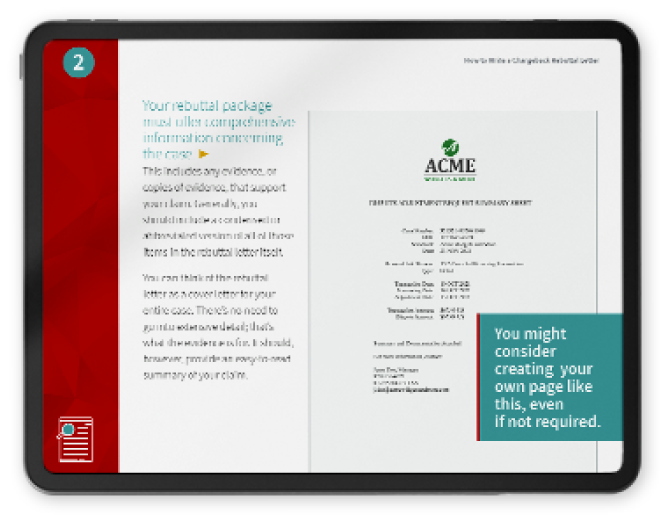
The more evidence you have, the better. What data you submit with your representment, however, can depend on the customer’s claim:

Applicable evidence:
- Notes showing clear terms of service and subscription agreement.
- Proof that the customer agreed to auto-renewal, billing terms, and refund/cancellation policy.
- Screen shots that include time stamp, IP address, and location at the time of use or acceptance.
- Evidence of a customer history of successful payments or renewals.

Applicable evidence:
- Proof of customer’s subscription activation and/or use.
- Records of customer logins (screen shots that include time stamp, IP address, location at the time of acceptance, etc.).
- Evidence of account activity beyond login (files uploaded, emails sent, etc.).
- Any usage metrics to prove the service was used after billing.

Applicable evidence:
- Screenshot of your billing descriptor as it appears on the customer’s bank statement showing they are clear.
- Copies of automated billing emails confirming the purchase, renewal, or trial conversion.
- Reminder emails sent before renewal (or any other customer communication).

Applicable evidence:
- Proof you used 3D Secure and abided by Strong Customer Authentication (SCA) best practices.
- Device fingerprinting, email verification, or location-matching that can be traced back to sign up.
- Any communication with the customer suggesting they authorized the transaction.
- Social proof; screencaps of the user talking about the service or product that show familiarity.

Applicable evidence:
- Proof that you have clear and fair cancellation and refund policies.
- Screenshots demonstrating no evidence that the customer tried to cancel through the established method.
- If cancellation was after the billing date, show how the charge was applied before cancellation.
When cardholders give you excuses, Chargebacks911 gives you practical rebuttals that help win representments.
Any Merchant May Struggle with Chargebacks
Chargebacks can pose a threat to any merchant, but companies with a SaaS component will face even more challenges.
There is an additional layer of complication introduced when dealing with intangible items, because it’s harder to disprove customer claims. To effectively manage this risk, executives need to think beyond generic fraud tools. It’s essential to evaluate solutions and strategies that are specifically tailored to the SaaS model, addressing both chargeback prevention and response.
Unfortunately, that’s more than many merchants can realistically handle on their own. Don’t worry, though: Chargebacks911 can help.
Chargebacks911 uses advanced AI and machine learning for the most effective chargeback management currently on the market. Our experts have over a decade’s worth of experience helping merchants combat chargebacks of all types, backed by the industry’s only performance-based ROI guarantee. To learn more, contact us now.
FAQs
Can I chargeback a subscription I didn't want?
Yes, you can dispute an unwanted subscription. But, whether you're successful depends on the situation. You’re more likely to win if you were charged without consent, canceled but still got billed, or if the terms were misleading or fraudulent.
Do merchants ever win chargeback disputes?
Yes, merchants do win chargebacks, but not nearly as often as consumers. SaaS disputes are even harder for merchants to win, as there is no physical evidence to support their challenge.
What is the new law about canceling subscriptions?
While some protections still exist at the local or state level, the so-called “Click to Cancel” law was aimed at ensuring businesses provided simple ways to cancel a subscription. The click-to-cancel rule was voided when courts ruled the FTC exceeded its authority with the new mandate. But, it’s still considered a best practice to operate according to these standards, so as to avoid potential issues like payment disputes.
Is it illegal to make it difficult to cancel subscriptions?
It can be illegal if the subscription cancellation process is deceptive or unfair, or violates federal laws or stricter state laws requiring clear and easy cancellation methods.