Dating Site ChargebacksKiss Dating Site Chargebacks Goodbye With These 5 Helpful Tips

Dado Kalem | November 10, 2025 | 11 min read

This featured video was created using artificial intelligence. The article, however, was written and edited by actual payment experts.

What are Dating Site Chargebacks?

In a Nutshell

Online dating can be an extremely lucrative venture... but it's not without risk. This article will examine why customers file dating site chargebacks. It'll also provide you with the top five high-risk payment processors for this vertical, plus a few basic tweaks to prevent chargebacks.

Dating Site Chargebacks: Why They Happen & How to Prevent

Once upon a time, people met, dated, and fell in love in person. True story. Before the rise of the internet, no one could have predicted that finding love online would become the new norm. Nevertheless, it's become one of the primary ways for couples to find one another.

Online dating is now the preferred way to find love for many people. Roughly one-third of US adults have used a dating app. And, one in five adults under 30 that are currently in a relationship say they met their partner on a dating app.

As you might expect with numbers like these, online dating services are extremely popular and profitable. Nonetheless, traditional banks and processors consider dating sites “high-risk” ventures. The reason is that the vertical tends to pose a greater likelihood of chargebacks and disputes.

So, how can merchants take advantage of the online dating boom without the heartaches associated with frequent dating site chargebacks? Let’s find out.

Dating Site Chargebacks: At a Glance

TL;DR

Dating apps typically rely on subscriptions to monetize their service, as well as one-off in-app purchases. Both of these models are highly susceptible to chargebacks.

A dating site chargeback happens when a customer disputes an online or in-app subscription or one-time purchase. When this happens, the cardholder’s issuing bank forcibly reverses the transaction, causing you to lose out on revenue and incur a chargeback fee.

Dating apps have limited channels for monetization; nearly all of them revolve around access. Most dating services either operate off a tiered or unlimited subscription model, a freemium model where users pay for profile boosts or virtual gifts, or an ad-based model.

The first two monetization models, which usually require users to make recurring payments, tend to be chargeback-prone. Subscription models attract disputes because users often forget that they subscribed. Or, because they find cancellation policies to be onerous or unfair. Even one-off purchases in this vertical come with elevated dispute risks, since buyers expect to pay for results (i.e. matches or dates), even though you can’t make any guarantees.

If customers feel like they’re not seeing outcomes after sinking money into their site, they may dispute their purchases out of frustration or retaliation.

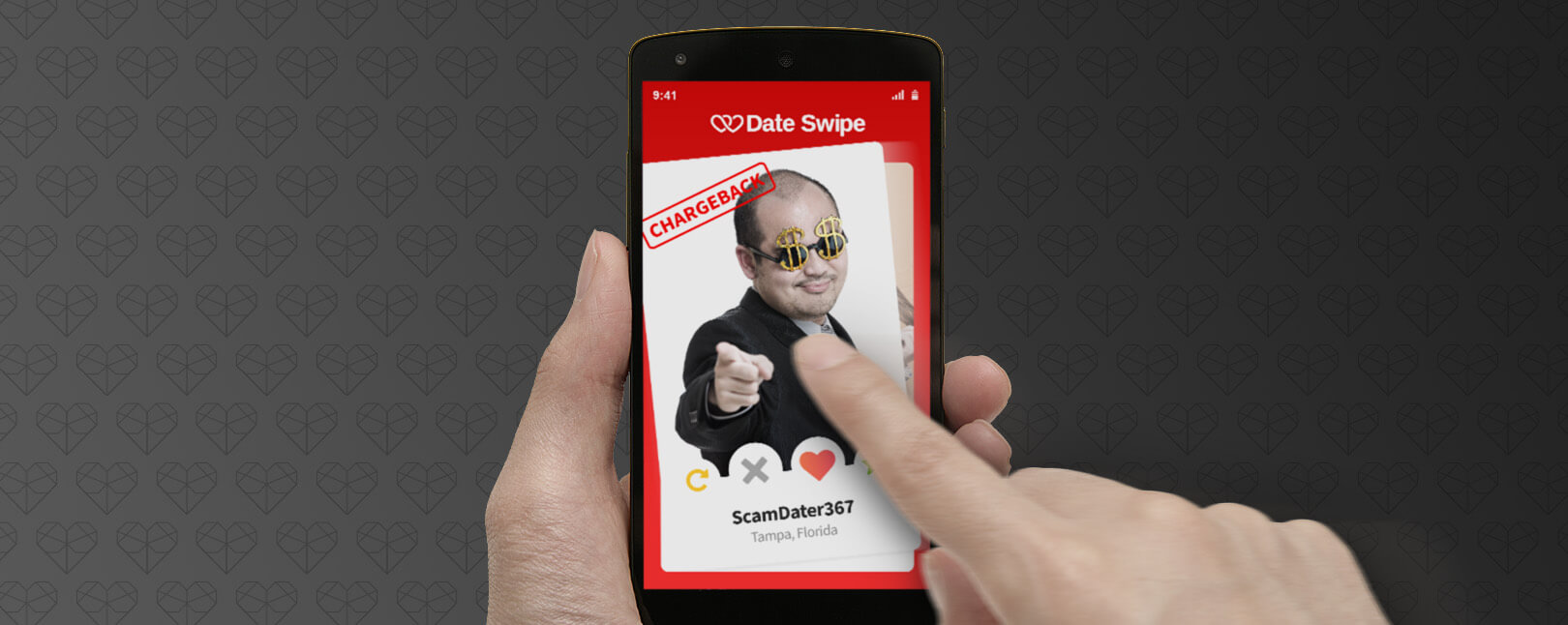
Dating App Chargeback Illustration

Much Ado About Chargebacks: 4 Big Questions Regarding Disputes

Chargebacks are a surprisingly complicated matter. With that in mind, let’s delve in and answer a few of the most often-asked questions about chargebacks and how they relate to the online dating industry.

What Causes Chargebacks?

There can be numerous potential chargeback triggers at different stages of a transaction. That said, we can trace all dating site chargebacks to one of three fundamental sources: merchant error, criminal fraud, or friendly fraud. Merchant error and criminal fraud chargebacks are preventable, but you can only stop friendly fraud after the fact by going through the chargeback representment process.

What Are the Consequences of a Chargeback?

Dating site chargebacks translate to lost revenue, plus you’re required to pay a fee to handle processing and administration. Bogus claims can add up quickly, resulting in reputational damage and increased operating costs. You’ll also likely be forced to maintain a merchant account reserve, meaning part of your revenue will be inaccessible. Ultimately, you could even be placed on the MATCH list; if the situation gets completely out of hand, you may even lose your ability to process payments.

What Is My “Chargeback Ratio?”

A chargeback ratio measures your monthly chargebacks as a portion of your total monthly transactions. Visa and Mastercard calculate this ratio differently; you’ll have a different chargeback ratio for each card brand. Breaching acceptable chargeback thresholds can lead to your business being placed in a chargeback monitoring program , which will increase your processing costs.

Why Are Dating Sites Considered “High Risk?”

All dating site operations are automatically classified as high-risk merchants based on their merchant category code (MCC). The reason is simple: businesses in this MCC tend to experience higher-than-average chargeback filings. You can still do business if you fall in this category, but it will require a high-risk merchant account. This offers some added leeway regarding chargebacks, but also entails added costs.

Why Do Dating Apps Receive so Many Chargebacks?

TL;DR

Many dating sites operate off subscription or freemium models, which are especially vulnerable to cyber shoplifting, buyer’s remorse, and other forms of friendly fraud.

Dating site chargebacks can be complicated. While we established that there are three fundamental  chargeback sources, there are innumerable potential chargeback triggers relating to those sources.

While these triggers are not unique to dating sites, they often take their own unique forms based on industry. Here’s an example that’s common to dating services: a customer pays for service, finds a match right off the bat, then files a chargeback to recover the money.

The customer might rationalize this by thinking, “I subscribed less than a week ago, and I was only on the site a couple of times!” That may be true, but it’s still not fair to you: after all, you provided the service and helped the customer just as promised.

This is a friendly fraud practice referred to as cyber shoplifting. Whatever the customer’s rationale, it comes down to the same thing: the intentional abuse of a chargeback to get something for free.

Avoid Chargeback Heartbreak.

Get the best chargeback management in the business. Call for your free ROI analysis today.

Request a Demo
The Original End-to-End Chargeback Management Platform

There are other, more benign threats out there, too. Take buyer’s remorse, for instance; a user may decide your service wasn’t what they were looking for, or that they couldn’t afford it. While it’s not really blatant cyber shoplifting, the cardholder is still not entitled to a dating site chargeback. You may also have a customer who signs up for a free trial, then forgets to cancel in time before being charged. This is a common problem among subscription-based merchants.

Chargebacks exist on a spectrum, with merchant fraud on one end, and cyber shoplifting on the other. Everything in the middle can be stopped through prevention or representment, and up to 86% of chargebacks fall under this category. The trick: you need the right tools and strategies.

Top 5 Best High-Risk Processors for Dating Sites

TL;DR

Dating site merchants can consider high-risk payment processors like Payline, PaymentCloud, PayKings, Soar Payments, and Easy Pay Direct.

While not necessarily ideal, high-risk merchant status is not the “kiss of death” some merchants think it is. Many reputable payment processors specialize in high-risk verticals like online dating and can help savvy merchants combine maximum profitability with affordable client-friendly service.

These high-risk processors are the best in the game:

Dating Site Chargebacks

Payline

Payline has assisted over 25,000 businesses in the US for more than a decade. They were the first company to display merchant processing fees directly on their website. The strength of their success has allowed them to form powerful partnerships and create optimal solutions for businesses looking to process payments.

Pricing: Payline uses an “interchange plus pricing” plan due to its transparency. Customers can take advantage of the wholesale rates set forth by the card brands. Payline then adds a small service fee above that.

Dating Site Chargebacks

PaymentCloud

PaymentCloud offers high-risk merchants competitive rates, reliable service, and easy set-up. The company handles advanced gateway setups with custom fraud filters tailored to the merchant’s needs. PaymentCloud also facilitates the migration of cardholder data from popular aggregators like Stripe and Braintree, and even help with eCommerce gateway integration on popular CMS platforms.

Pricing: eCommerce rates of 0 .50% + $0.25 per transaction, plus a $15 monthly fee


Dating Site Chargebacks

PayKings

With low custom rates for small businesses or large corporations, PayKings offers affordable merchant services, online credit card payment processing, and multiple other services for helping merchants get sustainable payment processing in high-risk industries.

Pricing: PayKings provides customized pricing for each merchant individually. On average, merchants pay from 1.5% - 4%, depending on their volume and vertical.

Dating Site Chargebacks

Soar Payments

Soar Payments offers credit card processing, eCheck, and ACH solutions to a wide range of merchants but specializes in serving those considered high-risk or hard-to-place. Soar Payments prides itself on exceptional customer service and competitive and transparent pricing.

Pricing: Options include interchange plus pricing or qualified discount rates ranging from 1.5% to 4%, depending on the vertical and merchant.


Dating Site Chargebacks

Easy Pay Direct

Easy Pay Direct provides a single point of contact to manage high volume and complex online payments. They allow for increased approval rates, multiple merchant accounts, a single payment gateway, and a single point of contact.

Pricing: Offers tiered pricing, starting at 2.44% + $0.17 per transaction.

How Can Dating Apps Fight Chargebacks?

TL;DR

Dating apps can fight disputes if they can provide proof that the user accessed the platform and sent notifications about upcoming payments, among other best practices.

So, you got a chargeback, but you’re confident that the customer’s claim is invalid. What do you do? I recommend that you:

Furnish Proof of Platform Access

As a dating site merchant, you’re offering an intangible service. When fighting a dispute, you don’t need to prove the user found a date. Instead, proving they logged in and used the service they signed up for is enough.

To do so, compile a clear, chronological log showing the customer’s login history (dates, times, and IP addresses) and evidence of in-app activity. Demonstrate that the IP address used at signup matches the IP address used for the disputed transaction and the IP addresses used for subsequent logins. Also, show that the user viewed and accepted your terms of service at signup.

Use Renewal Reminders as Evidence in Representment

Reminder emails are both a preventative measure and an offensive measure. Think about it: if a user files a friendly fraud chargeback even after receiving several reminder emails, your case is suddenly a lot stronger.

When compiling your representment package, include a screenshot from your email or CRM system showing the automated renewal reminders sent to the user’s email address. Describe this evidence in your rebuttal letter by summarizing the content in your reminder emails and the timeline on which they were sent.

Defend One-Off Purchases With In-App Proof

Freemium chargebacks must be fought differently than subscription disputes. In the former, it’s common for users to claim they didn’t get what they paid for or purchased it by accident.

When re-presenting freemium chargebacks, some of the best evidence you can offer is a log of the user’s in-app purchase flow. Show that the user initiated a specific, one-time purchase (e.g. 25 Super Likes for $30), a log of the purchase confirmation screen, and proof the virtual goods were delivered.

This evidence can prove that the purchase was intentional, separate from any subscription, and that you rendered the service on your end.

Consolidate All Evidence Into a Rebuttal Letter

The issuer doesn’t have time to review all of your evidence in detail, so you need to help them help you.

Instead of burying them in raw data logs and blurry screenshots, connect the dots for them in a simple, one-page summary that summarizes the evidence you submitted in plain English.

Specifically, include the customer name and their login email and the purchases or services under dispute. Then, discuss how the user interacted with your service or used the digital goods they purchased. Direct the reviewer to the attachments and screenshots that substantiate your claims. Finally, ask for the outcome you want (i.e. that you would like the chargeback to be reversed).

This makes it easy for the reviewer to understand you delivered the service as promised and rule in your favor.

How Can Dating Sites Prevent Chargebacks?

The confluence of your monetization models and online-only presence means that you face unique risks. The fact that users expect outcomes even when you can’t guarantee them makes things even worse.

That’s why you need to practice vertical-specific chargeback prevention tactics. Specifically:

Tip

Make it Clear That You’re Selling Access Rather Than Outcomes

It’s common for dating site users to file chargebacks because your service “didn’t work.” After all, some people may receive exceedingly few matches, even when using a paid service.

That’s why your marketing, signup process, and terms of service must make it clear that you’re selling access to potential partners, and that there’s no guarantee users will find matches or dates.

In practice, this means shifting your language from guaranteeing results (e.g. “Find your soulmate”) to promoting features (e.g. “Access 10,000 verified profiles, “Get 20 free swipes a day”). If a user files a dispute, you can then more easily prove that you delivered the service as described, no matter their romantic success (or lack thereof).

Did You Know?

The average match rate for a male user on Tinder is just 0.6%.

Tip

Tackle Subscription Amnesia on Long-Term Plans

So-called “subscription fatigue” and simple forgetfulness make recurring billing plans common targets for chargebacks. This risk is elevated for infrequent subscriptions. If users pay for a year of service upfront, it’s easy for a customer to forget they authorized the charge months ago, then be caught off-guard when they get the rebill.

To prevent these subscription disputes, you can’t rely on the initial signup agreement alone. Instead, proactively prevent them by sending renewal reminders a month, a week, and a day before the billing date.

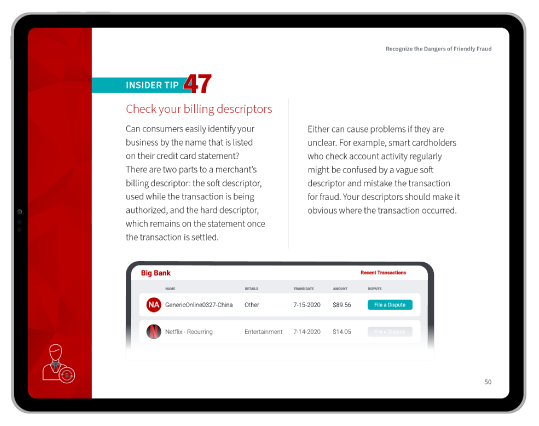
In your reminder emails, state the exact renewal amount (and price changes, if applicable), the upcoming transaction date, the billing descriptor as it will appear on their statement, and a link that users can follow to manage or cancel the subscription.

Tip

Make Cancellation Painless to Avoid Retaliatory Disputes

When a user wants to cancel, they are often in one of two emotional states: frustrated they didn't meet anyone or happy because they did meet someone. In either case, a difficult cancellation process involving hidden links, mandatory phone calls, or complex forms may lead to retaliatory chargebacks.

And look, I get it: cancellations aren’t ideal. It’s understandable why you’d want to make it harder, rather than easier, to cancel. But then again, chargebacks are far worse than a cancellation. That’s why it’s better to play fair by making your cancellation process as easy as your signup process.

You can also avoid permanent cancellations by offering a “Hibernate” option. This allows users who have met someone to temporarily pause their subscription without churning, and it gives frustrated users the time they need to cool off, which may help you avoid costly disputes.

Tip

Clarify the Value of Freemium Boosts and One-Off Purchases

Freemium models are plagued with users seeking immediate and tangible results for their money. When paying for super likes still doesn’t result in a match, they may feel ripped off and file a chargeback.

To close this expectation gap, you need to be crystal clear about what the user is buying. Instead of a vague promise like “Get seen more,” quantify the service (e.g. “Get seen by 3x more profiles for 24 hours”) without using promissory language. Use a clear purchase confirmation pop-up and a checkbox with a hyperlink to your terms of service so that you have evidence the user understood and authorized the specific, non-refundable, in-app purchase.

Tip

Use Smart Friction & Geofencing to Block Obvious Fraud

The high-risk nature of your vertical means you’re a prime target for both friendly fraud and third-party scammers who use your site to create fake profiles and test stolen cards. The good news is there are a lot of tools at your disposal to stop third-party fraud and prevent criminal fraud chargebacks.

For instance, try implementing selective geographic blocking; if you only serve users in North America, block all transactions and signups from high-risk IP addresses in overseas regions. At checkout, deploy Address Verification Services (AVS) and use 3-D Secure 2.0, both of which can add a layer of security to your transactions. This can also shift the liability for fraudulent chargebacks from you back to the cardholder’s bank.

Tip

Use Chargeback Alerts to Neutralize Disputes

Even if you win a chargeback in representment, you’re still stuck with the chargeback fee. Plus, your chargeback ratio goes up. Chargeback alerts let you solve disputes before they morph into formal chargebacks.

These alerts services, like Ethoca Alerts and Verifi CDRN, intercept a customer complaint at the bank level and give you up to 72 hours to act. During this window of time, you can pre-emptively issue a full refund, effectively neutralizing the possibility of a chargeback. Although you still lose the revenue, you avoid the much larger chargeback fee and, critically, prevent the dispute from hurting your chargeback-to-transaction ratio.

Don’t Fight Dating Site Chargebacks Alone

Running a dating site, fielding customer service inquiries, and juggling unrealistic user expectations is a full-time job on its own.

As a merchant, it’s common not to have the time, bandwidth, or knowledge to tackle chargebacks by yourself. Given the tight response time limits for sellers, the constantly changing rules, and cryptic chargeback reason codes — which differ by card network — you could use some expert assistance.

At Chargebacks911®, our dual-layered, end-to-end chargeback management solution helps dating site merchants prevent and represent disputes, saving you time, money, and hassle.

Interested in learning more? Get in touch with us for a free, no obligation ROI analysis today.

FAQs

What are the signs of a dating scammer?

Some signs that your lover could actually be a scammer include love bombing, inconsistent stories, an aversion to video calls, and an unwillingness to meet in-person.

Do police investigate chargebacks?

Police departments typically don’t investigate chargebacks. That falls within the purview of issuing and acquiring banks. However, if a pattern of chargebacks are connected to a criminal fraud complaint, law enforcement may step in.

What does OnlyFans do about chargebacks?

When an OnlyFans creator receives a chargeback, the platform withdraws funds from the creator’s account. If a creator receives an excessive number of chargebacks (typically a chargeback-to-transaction ratio of 1% or more), OnlyFans may suspend the creator.

Can you get banned for a chargeback?

Yes. Companies may manually or automatically limit, restrict, or ban payment methods or user accounts involved in chargebacks.

Like What You're Reading? Join our newsletter and stay up to date on the latest in payments and eCommerce trends.
Newsletter Signup
We’ll run the numbers; You’ll see the savings.
triangle shape background particle triangle shape background particle triangle shape background particle
Please share a few details and we'll connect with you!
Revenue Recovery icon
Over 18,000 companies recovered revenue with products from Chargebacks911
Close Form