
Stop Disputes & Fight Friendly Fraud With A More Effective Chargeback Solution
Chargebacks cost merchants an estimated $54.5 billion globally in 2024. And, as if that didn’t sound bad enough, some new data from Mastercard suggests that things could get worse.
Between 2025 and 2028, global chargeback volume is estimated to increase by roughly 24%, reaching 324 million annual disputes. And, with every $1 lost to fraudulent chargebacks now costing US merchants a record high of $4.61, it’s conceivable that chargebacks could soon be a more than $100 billion problem every year.
What can you do to protect yourself against this deluge of disputes? What chargeback solutions are available to you?
In this article, we’ll talk broadly about chargeback solutions and how you can manage your dispute risks. We’ll also explore how to compare options, what to look for in a dispute prevention solution, and what red flags to look out for before selecting a provider.
Recommended reading
- Holiday Profits Fade as Chargeback ‘Hangover’ Hits Merchants
- What’s an “Acceptable” Chargeback Rate? Why Does it Matter?
- Do You Need Subscription Chargeback Management?
- Essential Chargeback Management Services for 2026
- Automated Chargeback Recovery: Does It Make a Difference?
- Chargeback TCO: A Total Cost of Ownership Framework
What Should a Chargeback Solution Help You Accomplish?
Merchants should ask whether a prospective chargeback solution provider will have subject matter expertise, improve decisioning, protect their data and reputation, and offer customizable solutions, among other questions.
The best chargeback solution is the one that most effectively addresses your unique needs as a merchant. The best approach won’t be a “one size fits all” answer. That said, all effective solutions for chargebacks should accomplish a few key objectives:
#1 | Identify the Sources of Your Chargebacks
Every chargeback you receive will be attached to a chargeback reason code. However, reason codes are not reliable indicators, as three out of four chargebacks are suspected cases of first-party chargeback misuse.
You can break all chargebacks down into three main categories: merchant error, third-party fraud, or first-party fraud.
If you don’t know the sources of your chargebacks, you’re basically fighting blind. With the benefit of this insight, though, you can develop a much more resilient strategy tailored to your unique needs.
#2 | Stop Chargebacks From Happening
A chargeback solution must demonstrate measurable outcomes. The best (and most obvious) barometer of whether a chargeback solution is successful is whether it reduces the number of chargebacks filed against you. This can be measured by comparing your chargeback rate — the percentage of completed transactions that result in chargebacks — before and after adopting a strategy.
Once you’ve pinpointed the sources of your chargebacks, you can develop a strategy to see an immediate reduction in chargeback issuances. This can include tools like chargeback alerts and fraud scoring, as well as practices like optimizing customer service and billing descriptors.
If your chargeback-to-transaction ratio is close to the threshold for inclusion in a merchant monitoring program, you need your chargeback solution to help you lower your chargeback rate as soon as possible. The stakes are high: if you’re involuntarily enrolled in a dispute monitoring program, you could face surcharges and fines worth thousands of dollars per month.
Chargebacks911® offers the industry’s broadest alert coverage for an immediate reduction in chargeback issuances. Chargebacks911 enables you to hit “pause” on chargebacks, then implement long-term solutions to stop disputes before they happen.
You’ll never be caught off guard by another chargeback again. Click here and get started today.
#3 | Reduce Your Long-Term Chargeback Risk
A good chargeback solution is proactive, not reactive. That means that your chargeback solution should help you identify and quash chargeback risk factors before chargebacks get filed.
For example, it’s considered a best practice to require buyers to input card verification values, or CVVs, when entering their payment information during checkout. Validating CVVs will go a long way to verify the legitimacy of a payment and help deter unauthorized activity. But, some merchants still do not require buyers to provide CVVs during checkout, leading to a heightened risk of chargebacks.
An effective chargeback solution, in this instance, would encourage merchants to ask for CVVs prior to payment. The solution would also identify other root causes related to chargebacks, such as merchant error, bad affiliate traffic, or convoluted cancellation procedures.
#4 | Demonstrate a Positive Return on Investment
An effective chargeback solution is not free. Depending on the approach you take, your chargeback solution may demand significant resources. None of this is really a problem, though, as long as you see a return on your investment.
Finding a chargeback solution that proactively reduces the frequency or volume of chargebacks is only half the battle. The true test of whether a chargeback solution is “worth it” or not is whether it saves you more money and time than it costs.
At Chargebacks911, we’ve built an end-to-end chargeback management platform that has a proven track record of generating a positive return on investment. Simply put, our chargeback solution helps you recover more in penalties and lost revenue than it costs you to implement. Click here to see how you could save.
#5 | Be the Right Fit for Your Business
A “one-sized-fits-all” chargeback solution isn’t going to cut it. As a merchant, your line of business heavily influences the fraud risks you face. For example, if you run a credit repair shop, a digital subscription service, or operate in another high-risk vertical, you could face much higher chargeback risks than if you ran, say, a business-to-government (B2G) supplier.
Before settling on a chargeback solution, take a look at their case studies. Have they successfully worked with businesses that operate in your vertical? Can their sales or implementation team recommend specific fraud filters, settings, or tweaks tailored to risks in your vertical? Or, does it seem like they’re trying to push a generic, all-purpose solution?
How a vendor answers your tough questions can help you determine whether their chargeback solution is right for you. The same applies when looking at how far they’re willing to go to create a customized solution for your needs.
Chargeback911 offers scalable solutions specifically tailored to the needs of eCommerce, travel, retail, and digital merchants. From insurance agencies and footwear sellers to online travel agencies (OTAs) and subscription merchants, the dispute experts at Chargebacks911 know your industry and are ready to help your business succeed. Book a demo today.
Selecting a Chargeback Solution: “Green Flags” to Look for
Signs of a reliable chargeback solution provider include ROI guarantees, transparency, flexible architecture, notable integrations, and relevant case studies.
As we outlined above, a chargeback solution should help you accomplish five things: identify chargeback sources, stop disputes, reduce risk, demonstrate ROI, and adapt to your business. But, what a chargeback solution does, how quickly it works, and how much it helps your business is what separates an okay solution from a great one.
Here are some “green flags” that should help you identify a great chargeback solution:
As we mentioned before, every chargeback solution worth considering should demonstrate a positive return on investment. The best providers take this a step further: they should be willing to “eat their own cooking” by backing their ROI projections with a concrete guarantee.
In other words, if you implement a chargeback solution and don’t see the results you’re looking for, a top-tier vendor should be willing to waive fees or compensate you for ROI shortfalls. Doing so shows they stand by their chargeback solution and the results they claim it can achieve.
Implementation timelines vary depending on the scale and complexity of the chargeback solution you settle on. For example, small businesses pursuing Saas-based solutions can probably have something up and running within hours. By contrast, enterprises may be in need of solutions involving complex ERP integrations and data migration workflows. A realistic implementation timeline for this may be days (or even weeks).
It’s important that your solution provider is transparent about how long implementation will take, and be ready to work with you at every step of the way.
A rigid, one-size-fits-all approach to fraud detection is a sign of an inflexible or outdated solution. Providers that try to be forward-thinking use AI and machine learning to set fraud rules. In contrast, more traditional solutions use manual controls. The best chargeback solutions, however, offer a flexible, hybrid architecture.
A good solution will let you leverage machine learning to identify broad patterns and evolving threats. But, will still allow for granular control stemming from the ability to apply custom rules based on your unique business insights and industry knowledge. Adaptability ensures that your chargeback solution is as dynamic as the fraudsters you’re trying to stop.
A great chargeback solution doesn’t operate in a silo. Look for a provider that offers extensive, deep integrations across your entire tech stack; not just with your payment processor alone.
A chargeback solution that seamlessly connects with your eCommerce platform, CRM, inventory management system, and even your accounting software can help you create a powerful, unified ecosystem. Seamless integration allows for a richer flow of data, which sharpens fraud detection accuracy and enables automated workflows that save you time and reduce the risk of manual error.
General claims about reducing chargebacks or boosting ROI are easy to make. As mentioned before, the real test is whether a provider has a proven track record of success with businesses like yours.
Ask for performance data from merchants in your specific vertical; if you’re a subscription seller, for instance, then ask for a case study showing how the solution provider has produced an ROI for other subscription sellers. A provider who understands the nuanced fraud risks and customer behaviors of your industry will be far better equipped to tailor a solution that delivers meaningful results for you.
Selecting a Chargeback Solution: “Red Flags” to Avoid
Signs of an unreliable chargeback solution provider a lack of certifications, few (or no) integrations, vague analytics, and a history of security breaches.
Not all chargeback solutions on the market are going to work for you. In fact, some solutions may not even be worth considering at all.
Below, I’ve outlined a few factors that should be clear “red flags.” If detected, these should probably rule a provider out of your decision matrix:
A chargeback solution provider will handle sensitive customer and transaction data, so security is non-negotiable. At a minimum, a provider must be PCI-DSS compliant. They must also adhere to regional and state-specific data privacy regulations like the General Data Protection Regulation (GDPR) and the California Consumer Privacy Act (CCPA). A lack of these certifications is an immediate warning sign that signals the provider may not take data security and regulatory compliance seriously enough to be trusted with your business.
The absence of a key integration is a clear problem, but a shallow integration can be just as bad. A weak connection that only syncs basic transaction data or fails to allow for a two-way flow of information will create data silos and require more manual work from your team. If a provider’s integrations don’t cover your essential tools or appear superficial, it suggests the solution in question will disrupt your workflows more than streamline them.
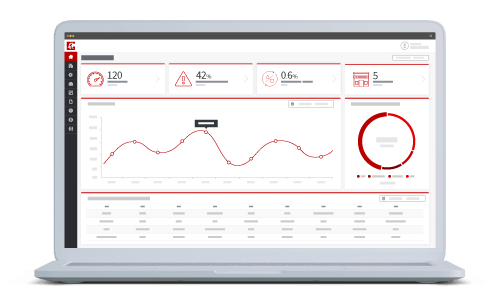
Data is only useful if it leads to better decisions. Your analytics should help you understand the root cause of your chargebacks; for example, by identifying which marketing campaigns, products, or geographic regions are most problematic. It’s a problem if you have a dashboard full of vanity metrics, but lack actionable insights. So, if a solution’s reporting can’t help you refine your fraud triggers and prevent future disputes, you may be better off walking away.
Even a single instance of a past data breach or known (but unpatched) security vulnerability should be a cause for concern. After all, if a vendor can’t defend themselves from fraud or cyberattacks, then it’s reasonable to doubt their ability to protect you and your customers’ data… let alone defend your business against threats like friendly fraud.
Let us show you how much you could save.
Request a Demo
What Questions Should You Ask Before Selecting A Chargeback Solution?
As you might expect, not all chargeback solutions are created equal. So it’s important to know what benefits you should expect from a reliable chargeback solution provider:
SaaS vs. Full-Managed Chargeback Solutions: What Approach Should You Take?
SaaS chargeback solutions can work for small businesses that want to take a DIY approach to dispute management. But, a fully-managed chargeback solution will work best for SMBs and enterprise-level merchants that don’t have the time or resources for in-house management, or who would rather invest their energy in growing their business.
Broadly speaking, merchants can choose from one of three chargeback solution types: self-management, software as a solution (SaaS), or a fully-managed outsourced solution. These solution categories vary in terms of price point, complexity, and effectiveness.
Software-as-a-Solution (SaaS)
Cloud-based chargeback management is built with integration in mind, allowing you to connect your proprietary tools and data feeds to the software platform.
Software-based chargeback solutions are a good fit for SMBs that want a rapidly deployable, easy-to-implement platform at a reasonable price point.
SaaS-based chargeback solutions are only customizable to a limited extent, though. Although this is a non-issue for businesses that contend with a low volume of ongoing chargebacks, a fully-managed outsourced solution may be a better fit for enterprise-level merchants.
Fully-Managed Outsourced Solution
A fully-managed, outsourced solution is the most comprehensive form of chargeback management solution available on the market. In a fully-managed solution, every phase of the chargeback lifecycle, from risk management and prevention to data analysis and representment, is handled by a third party.
You will not need to participate directly in the chargeback management process. But, your solution provider may offer regular reporting, benchmarking, and ROI analysis to keep you informed about the work being carried out in the background.
Chargebacks911 offers scalable solutions that grow with your business. Whether you’re a large enterprise or a mom-and-pop operation, we’ve got your back.
The Right Solution for You
It doesn’t matter if you need a fully-managed chargeback solution, or just some help here and there. Chargebacks911 has you covered. We challenge the status quo by proving how effective comprehensive chargeback management can be.
Chargebacks911 offers:
- Customized Solutions: A dual-layer approach that addresses both sides of the issue (prevention and representment) drives revenue recovery and reduces chargebacks in the long term.
- Effective Representments: Approaching the representment process from a data-driven, tactical angle will help recover revenue and drive long-term growth.
- Intelligent Source Detection: No more relying on chargeback reason codes. ISD technology lets you fight chargebacks based on the true reason, not just the reason code.
- Merchant Compliance Review: There are more than 100 potential errors and missteps that can cause chargebacks. Professional review lets you eliminate triggers that lead to chargebacks.
- Dispute Prevention: Stop chargebacks before they’re ever filed. Chargeback alerts ensure that you never get caught off guard by another dispute.
Chargebacks911 has what you need, when you need it.
We offer highly scalable chargeback solutions customized for any business, of any size, in any industry. Call us today and claim your free demo.

FAQs
What is a chargeback solution?
A chargeback solution refers to strategies, tactics, and technologies that merchants can deploy to minimize and mitigate the risk and frequency of present and future instances of chargeback fraud.
How do you resolve chargeback issues?
You’ll need to gather evidence in support of the disputed transaction’s legitimacy and submit it to the issuing bank. Doing so enables you to contest the chargeback and increases the likelihood that the disputed charge is resolved in your favor.
Why would someone do a chargeback?
Buyers file chargebacks for both valid and invalid reasons. If the buyer detects unauthorized activity on their card, or receives severely delayed or damaged goods, they can file a chargeback. Illegitimate reasons for chargebacks include buyer’s remorse, family fraud, cyber shoplifting, or fraudulent intent on the part of the buyer.
Who decides who wins a chargeback?
The issuing bank decides who wins and loses a chargeback through the dispute process. This allows both the buyer and the merchant to submit evidence that either supports or refutes the legitimacy of the chargeback. If the buyer wins the dispute, the charge is reversed and the merchant is assessed chargeback fees. If the merchant wins the dispute, the charge remains and the buyer may incur penalty fees.
What happens if you don't respond to a chargeback?
If you’re a merchant and you don’t respond to a chargeback, you lose by default. That means the charge disputed by the buyer will be reversed in their favor. On top of that, you will also incur chargeback fees, which range from $5 to $100 per occurrence.
Who usually wins chargebacks?
Cardholders win the overwhelming majority of chargebacks. On average, cardholders win between 60% and 70% of all chargebacks that progress to representment. But, if we look at chargebacks overall, rather than just those that are re-presented to the bank, merchants win less than one in five disputes.
Do banks really investigate chargebacks?
Yes. Banks really do investigate chargebacks because they are required to examine whether a cardholder’s claims are legitimate before a chargeback is initiated against the merchant. That said, banks are often inundated with chargeback claims from cardholders, so the investigation process may not be as thorough as hoped.
How do I win a chargeback every time?
Whether you’re a cardholder or a merchant, it’s difficult to win every chargeback you file or receive, respectively. However, chargeback claims or rebuttals that are submitted on time, and substantiated with compelling evidence, are more likely to prevail.