
Void TransactionHow Voiding a Transaction Before Settlement Can Actually Save You Money

David DeCorte | May 22, 2026 | 10 min read

This featured video was created using artificial intelligence. The article, however, was written and edited by actual payment experts.

What is a Void Transaction?

In a Nutshell

If a customer calls you to cancel a purchase you’ve already processed and settled, would you perform a “void” or a “refund?” If the answer to this question isn’t immediately apparent, you’ve come to the right place. This article will explain everything you need to know about void transactions, including what they are, how they work, and how they should be used.

Should You Refund or Void Transactions? Which is the Better Option for Your Bottom Line?

Generally speaking, if a customer asks you to cancel a transaction they have just paid for, what they’re really asking you to do is “void” that transaction.

This means that you would have to look up and void (or manually cancel) that transaction before settlement occurs. But, timing is of the essence. 

If the void transaction order doesn’t go through before settlement, your only recourse is to refund the purchase. This will cost you more time and money to resolve. But… why?

Let’s go over the process together and see what voided transactions are, how long a voided transaction takes, and outline when they’re a good option.

What is a Void Transaction?

Void Transaction

[noun]/void • tran • zak • SH(ə)n/

A void transaction (or transaction void) is a transaction that is canceled by a merchant before it reaches settlement. Once a transaction has been “settled,” it’s effectively complete and can no longer be nullified. But, a transaction void lets you cancel fulfillment before that happens.

If you void a transaction, then the cardholder’s bank won’t charge (or debit) the cardholder’s account for that purchase. Also, you won’t be charged any credit card processing fees for the transaction.

A transaction can only be voided if it has been authorized, but not settled. So, you have to stop it from processing before it settles with your merchant service provider or payment processor. For most merchants, transactions are batched and sent for settlement at the end of each business day, so you generally have until that cutoff to void any transactions processed earlier in the day.

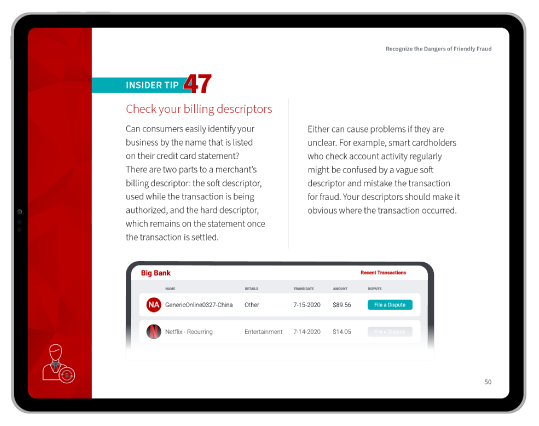
A void may appear on a cardholder’s account as a pending transaction until it eventually drops off. As you might guess, this can be a point of confusion between consumers and merchants. So, work with your processor to ensure that the descriptor that shows up on your customer’s statement is as clear as possible.

Important!

You won’t be charged a standard processing fee for a voided transaction, as you’re canceling the sale before interchange fees and other per-transaction charges are added. But, policies vary by processor, and some may assess a nominal fee to void a transaction. Verify the details of the specific agreement you have with your processor.

Is a Void Transaction the Same as a Refund?

TL;DR

No. Voided transactions are canceled before settlement, while refunds involve the reversing of a transaction that has already been settled.

Voided transactions are often confused with payment cancellations, as well as payment reversals like refunds and authorization reversals. While these are all related processes, they’re all still distinct. To illustrate, let’s compare voided transactions to refunds.

Voided Transactions

Transaction is canceled before settlement.


Initial transaction vanishes from customer’s statement.


Processed immediately, and is typically resolved in less than three days.

Refunds

Transfers settled funds from your account to the customer’s.


Remains on customer’s statement as a separate entry from initial transaction.


Can take several days to process, depending on the circumstances.
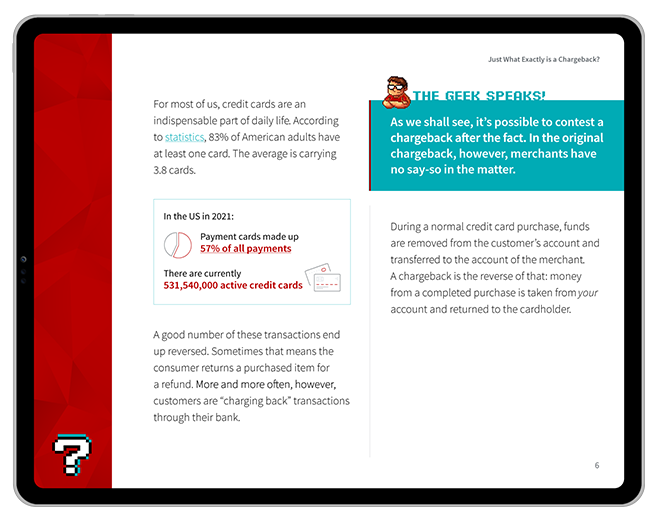
When a transaction is voided, no money ever leaves the customer’s account. Refunds, on the other hand, occur after a transaction is settled and funds have been removed from the cardholder’s account.

Remember, refunds also take a lot longer to process than voids. Because the funds have to be rerouted from your account to the buyer, there are more steps and moving parts at play.

Lastly, instant capture can also be a factor in void transactions. That is, if you use a third-party payment aggregator like Stripe or Square and have opted into instant transfers, then payments generally settle on the same day as the transaction. If instant capture is enabled, you would naturally be unable to void these transactions unless you manage to catch them immediately.

Common QuestionWhat is a “cleared” transaction?A cleared transaction is a transaction that has been batched and submitted to the acquirer for processing, and which has been settled, with funds transferred to the merchant. Once a transaction is cleared, it is too late to request a void or authorization reversal; to cancel the transaction, it must be refunded as a separate transaction.

How Do I Void a Transaction?

Voiding a transaction is very simple. Most processors allow you to perform this function in seconds through an online dashboard with just a couple of clicks.

With omnichannel POS and payment solution provider Bindo Labs, for instance, you can simply select a transaction from the list of transactions processed during the day in question, click on the options button and select “Void Payment.”
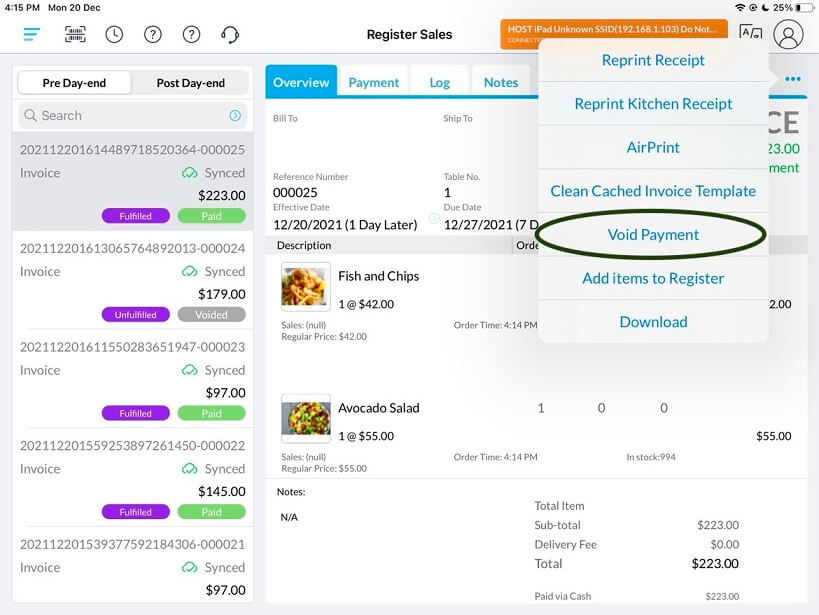
Bindo Void Process Screenshot

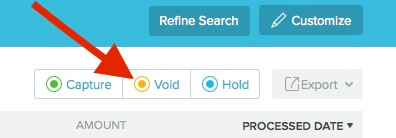
PayJunction has a similar process. You’d use their virtual terminal to search for the order in question, using the customer’s name or other information that can help identify the transaction. You then simply select the transaction you wish to void, and and click the “Void” button:

PayJunction Void Process Screenshot

Again, most processors will have a similar function in place to easily void a transaction before it is batched and processed. But, now that we have a better understanding of how the void transaction process works, let’s talk about when and how you’d likely initiate one.

Did You Know?

The exact timing for settlement varies by processor. Some batch at a fixed time (such as 10 PM Eastern), while others allow you to manually initiate settlement or set a custom schedule. If you're unsure when your settlement window closes, check with your payment processor or review your merchant account settings. Knowing this cutoff is essential; once the batch is submitted, voiding is no longer an option.

Recover sales. Retain revenue. Grow your business.

Request a Demo
The Original End-to-End Chargeback Management Platform

Communicating Voided Transactions to Customers

Even after you void a transaction, the charge may still appear as “pending” on the customer’s bank statement. This is normal. But, it can also cause confusion if the customer checks their account before the hold drops off.

In most cases, a voided transaction will disappear within 72 hours, though the exact timing depends on the customer’s bank. Some financial institutions release holds faster than others, and weekends or holidays can extend the timeline.

When a customer asks about a pending charge you’ve already voided, a brief explanation usually resolves the concern. Something like:

“We’ve canceled the transaction on our end, so you won’t be charged. Your bank may still show it as pending for a day or two, but it will drop off automatically. There’s no action needed on your part.”

This kind of proactive communication can prevent unnecessary frustration. More importantly, it can stop the customer from calling their bank to dispute a charge that’s already been voided.

When Should You Void a Transaction?

TL;DR

You should void a transaction if you or the customer made an error, like initiating a duplicate transaction. Voided transactions are also appropriate for cases in which fraud is suspected.

There are a few different situations in which you might want to void a transaction. Three of the most common reasons for this are because an error was made, a customer has changed their mind, or because fraud is suspected.

In the two former cases, you would simply want to cancel the transaction before it is settled. However, in the latter circumstance, you’d be attempting to stop a transaction before the money is stolen from you or your customer.

Transaction Errors

Transaction errors which might necessitate a void are typically mistakes made when inputting orders or processing transactions.

For instance, if you ring up the wrong amount during a transaction, or apply the wrong credit card information during checkout. In either of these cases, you should either cancel (if the card has not been charged) or void the transaction (if the card has been charged). You can then try rescanning the items and charging the customer for the correct amount.

Customer Errors

Customer errors generally occur when a customer has made a mistake on their end, like paying with the wrong card, ordering the wrong items, or simply changing their mind. Whatever the case may be, so long as the payment has not settled, you should be able to void the transaction. There is one caveat here, though: instant capture.

As mentioned above, instant capture allows merchants to settle transactions the same or the next day. Some instant transfers can be deposited in minutes and settled in just a few hours. Those funds would be ineligible for a void, and would need to be refunded.

Suspected Fraud

If you suspect a transaction is fraudulent, you can void it and report it to your payment processor and card network. Individual card issuers generally have protocols in place to flag and remove fraudulent transactions before settlement. Once the transaction is successfully settled, though, it’s too late to stop it.

Card issuers and processors also have the ability to identify and isolate potentially fraudulent transactions. If something appears suspicious on their end, the payment may be placed on hold until the customer can verify their credentials. When they can’t be reached or simply don’t respond, the transaction may be voided at the issuer level.

Important!

Issuers have processes in place to detect fraud. However, you should never count on banks and processors to detect fraud on your behalf.

You should have multilayer fraud detection in place to authenticate your customers. You also need a strategy capable of detecting fraud before and after each transaction (i.e. first-party fraud).

Still not entirely clear? Here’s a quick example.

Let’s say you’re a restaurant manager. You’re training a new employee, and she accidentally rings up the wrong meal on your customer’s credit card. If you get to it right away, the transaction can be voided, removing it from sales tallies for the day. It won’t be charged to the customer’s account; it will be as if the transaction never happened.

If no one notices the mistake until the transaction has already been settled with the cardholder’s account, you would then need to process a refund or issue the customer a credit to make up for the mistake.

Obviously, catching it as early as possible is the best possible outcome since you wouldn’t need to pay the processing fees for the sale. That's the main advantage of voiding a transaction as compared to other options like refunds.

Voiding Transactions as a Chargeback Prevention Tactic

TL;DR

Voiding transactions, when appropriate, can help you avoid chargebacks before they happen.

Here’s another common scenario: a customer notices a duplicate charge on their account. Rather than waiting for a refund, the customer panics and calls their bank to dispute the charge. Now you’re dealing with a chargeback.

On the other hand, if you catch the mistake before settlement, and you’re able to void the transaction, then there’s nothing left to dispute. The charge disappears from the customer's pending transactions, and the issue is resolved cleanly. The same logic applies to issues like pricing mistakes, accidental charges, or orders the customer wants to cancel; if the transaction hasn’t settled yet, you can void it, and the problem is immediately solved.

This is why training your team to recognize void-eligible situations — and to act quickly in those cases — can directly reduce your chargeback volume. Every transaction you void before settlement is one less opportunity for a customer to escalate the issue to their bank.

Important!

Of course, voids only work within that narrow pre-settlement window. For issues that come up after settlement, you have to have other tools in your arsenal, like chargeback alerts or proactive refund policies.

End-to-End Coverage Against ALL Chargeback Sources

The void transaction process can save you some headaches. However, it’s best to avoid the errors and suspected fraud cases that cause voided transactions in the first place.

Not sure where to start? No worries: Chargebacks911® has got you covered.

Chargebacks911 offers the industry’s most comprehensive, end-to-end solution for chargebacks, regardless of dispute source. Our merchant-focused platform helps you eliminate errors that cause chargebacks at every stage of the transaction process, from pre-purchase to long after fulfillment.

Ready to take the next step in combating all types of chargebacks and recovering more revenue? Contact us today for a free chargeback analysis to diagnose your business’s risk level.

FAQs

Is a void transaction the same as a refund?

No. When a transaction is voided, no money ever leaves the customer’s account. Refunds, on the other hand, occur after a transaction is settled and funds have been removed from the cardholder’s account. Remember that refunds also take a lot longer to process than voids. Some refunds can take over 30 days to reappear in the cardholder’s account.

What is an example of a voided transaction?

Here’s a quick example: let’s say you’re a restaurant manager. You’re training a new employee, and she accidentally rings up the wrong meal on your customer’s credit card. If you get to it right away, the transaction can be voided, removing it from sales tallies for the day. It won’t be charged to the customer’s account; it will be as if the transaction never happened.

If no one notices the mistake until the transaction has already been settled with the cardholder’s account, you would then need to process a refund or issue the customer a credit to make up for the mistake.

How long does a void transaction take?

There’s not a set answer for this, as it depends on factors including the institution in question, when the void was issued, etc. Until the void is cleared, the transaction will be placed on hold and appear as a pending transaction in the cardholder’s account. That said, the voided transaction should disappear within two to three business days, and any funds held will be released.

Why does a void transaction happen?

There are many reasons why you might want to void a transaction. Three of the most common reasons are either an error has been made, a customer has changed their mind, or fraud is suspected. In the two former cases, you would simply want to cancel the transaction before it is settled. However, in the latter circumstance, you’d be attempting to stop a transaction before the money is stolen from you or your customer.


Can a voided transaction be reversed or undone?

Generally, no. Once a transaction is voided, the cancellation is final. The authorization hold is released, and the transaction won’t proceed to settlement. If you voided a transaction by mistake and still need to collect payment, you’ll have to process a new transaction with the customer’s card.

Will a voided transaction affect my credit score?

No. Because a voided transaction is canceled before settlement, no funds are transferred and nothing is reported to credit bureaus. The transaction effectively never happened from a financial standpoint. The customer may see a temporary pending charge on their account, but it will drop off without any impact to their credit.

How do I know if my processor supports voids?

Nearly all payment processors support void transactions; it’s a standard function in credit card processing. You can typically find the void option in your POS system, payment gateway dashboard, or virtual terminal. If you’re unsure how to access it, check your processor’s documentation or contact their support team. It’s worth familiarizing yourself with the process before you need it.

What happens if I try to void after settlement?

You can’t. Once a transaction has been batched and settled, the funds have already transferred and the transaction is complete. At that point, your only option is to issue a refund, which returns the settled funds to the customer’s account as a separate transaction. Refunds take longer to process and typically don’t recover the processing fees you paid on the original sale.

Can I do a partial void for a transaction?

It depends on your processor. Some payment systems allow partial voids, letting you reduce the transaction amount before settlement, which can be useful if a customer removes an item from their order or you need to adjust the total. However, not all processors support this feature. If yours doesn’t, you would need to void the entire transaction and reprocess it for the corrected amount.

Like What You're Reading? Join our newsletter and stay up to date on the latest in payments and eCommerce trends.
Newsletter Signup
We’ll run the numbers; You’ll see the savings.
triangle shape background particle triangle shape background particle triangle shape background particle
Please share a few details and we'll connect with you!
Revenue Recovery icon
Over 18,000 companies recovered revenue with products from Chargebacks911
Close Form