





What Do Chargeback Management Services Actually Do? Here’s the Basic Rundown.
A dispute ratio creeping upward. A warning from their acquirer. Staff spending hours every week on dispute paperwork that still isn’t catching up. By this point, chargebacks have probably already cost significantly more than they should have.
The merchants who get the best outcomes from professional chargeback management are not the ones who hired help in a crisis. They are the ones who understood what these services actually do — and what they do not do — before they needed them. What follows is that understanding: what chargeback management services are, what a complete service actually covers, how the market structures itself, and where the thresholds are that make professional help the obviously correct decision.
Recommended reading
- Chargeback Ratio | Calculate & Save Revenue in the Process
- What’s an “Acceptable” Chargeback Rate? Why Does it Matter?
- Chargeback Companies: How to Choose the Right Provider
- Automated Chargeback Management | Block 90% of Disputes
- Do You Need Subscription Chargeback Management?
- Holiday Profits Fade as Chargeback ‘Hangover’ Hits Merchants
What Do Chargeback Management Services Do?
Chargeback management services are third-party programs that can handle some or all of the dispute lifecycle on a merchant’s behalf, from stopping chargebacks before they’re filed to contesting them after the fact.
Professional services for chargeback management exist because the dispute lifecycle is genuinely difficult to manage well without specialisation.
Card network deadlines for responses vary depending on the network and reason code. But in all cases, missing the deadline means forfeiting any right to contest the dispute. Evidence requirements differ by card network, reason code, and issuer behaviour — and they change regularly as networks update their rules. Keeping up with those changes manually is a full-time job for someone who already knows what they are doing.
You can’t afford to waste revenue on chargebacks.
Proprietary tools and techniques from Chargebacks911 can mean up to 90% reduction in chargebacks.
Request a Demo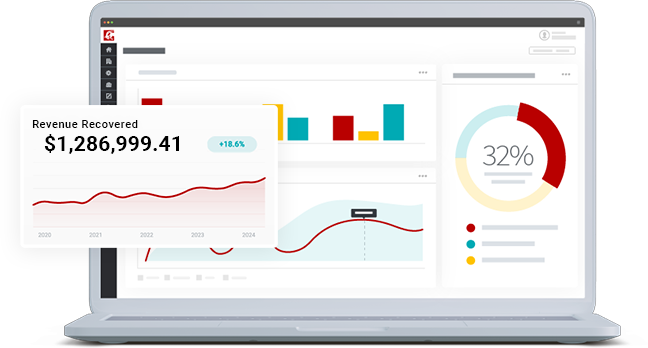
The practical consequence of these constraints is measurable. Without professional help, the average merchant wins roughly 20-30% of the disputes they actually challenge, but leaves more than 40% of all disputes completely uncontested, either because the deadline passed or because the case felt too complex to attempt. That is not a judgment on in-house teams. It is a structural consequence of trying to manage a specialised, deadline-driven process without the dedicated infrastructure to do it well.
What these services are not: they do not guarantee outcomes, do not replace the merchant’s relationship with their acquirer, and cannot change card network rules. What they do is apply specialised knowledge, purpose-built tools, and — in the case of fully-managed services — dedicated human expertise to a process, thereby consistently producing better outcomes than generalist in-house management.

What Does a Complete Chargeback Management Service Cover?
A chargeback management service may offer solutions to help address the full dispute lifecycle: alerts and deflection, representment, and the pattern analysis that informs future prevention.
The single most common misunderstanding about chargeback management services is that they are synonymous with representment, or with chargeback alerts. These are both components of a full chargeback management strategy. A complete strategy calls for:
Chargeback Alerts & Deflection
Alerts intercept disputes after a cardholder contacts their bank but before a formal chargeback is filed. Verifi CDRN and Ethoca Alerts notify enrolled merchants of pending disputes in real time, giving a short window — typically 72 hours — to issue a refund and stop the chargeback from filing.
Visa’s Rapid Dispute Resolution (RDR) programme goes further, automatically resolving qualifying disputes without any merchant action required. Additional tools like Order Insight and Consumer Clarity can provide critical transaction information, potentially resolving many cardholder inquiries before a dispute occurs.
For merchants with high dispute volume, these forms of coverage are among the most impactful additions available. The dispute never files, so there is no fee, no ratio impact, and no evidence to compile — just the cost of the refund, which the merchant would likely lose to the chargeback anyway.


Cover the Full Dispute Lifecycle
Chargebacks911 provides alerts, representment, and source detection as part of a fully integrated, end-to-end platform.
Request a Demo
Managed Services vs. Software Tools
The most consequential decision in chargeback management isn’t which provider to choose — it’s whether you want software that you operate yourself or a managed service where a team handles disputes on your behalf. Each model has different involvement requirements, performance ceilings, and cost structures.
The most consequential decision in chargeback management is not which provider to choose. It is whether you want software you operate yourself or a managed service where a team handles disputes on your behalf.
Evaluating providers before settling that question is working in the wrong order.
Better Tools for Better Chargeback Analysis
Even merchants who opt for an in-house analyst can benefit from better data. The Chargebacks911 platform offers customizable, easy-to-use data reporting.
Request a Demo
When DIY Chargeback Management Stops Working
In-house chargeback management is viable at low volumes with simple dispute compositions, but it becomes both costly and risky once dispute volume, ratio, or complexity exceeds what your team can handle.
Most merchants begin by managing chargebacks in-house. At low volumes, that is often the right decision; the cost of a professional service may exceed what you would recover from a modest dispute count. But the point at which professional help delivers clear positive ROI is earlier than most merchants realise, and the cost of waiting compounds in ways that are not always immediately visible.
Win rate — the metric most providers report to track chargeback representment — only measures disputes the provider chose to fight, not the full scope of chargebacks received. Net recovery rate is the honest performance measure, and the gap between these two numbers is often where poor performance hides.

What to Expect From Integration
Implementation requirements vary significantly by service model — software tools require technical integration while managed services require detailed business documentation and a thorough onboarding process.
Implementation requirements vary significantly by service model, and the quality of the setup phase directly affects long-term performance. Either way, meaningful upfront investment is required to deliver meaningful results.
There are certain things you’ll need to provide regardless of the level of chargeback management service you pursue. Transaction data access, processing history, dispute history (at least six months, ideally twelve), business documentation including your return policy and terms of service, and contact information for your acquirer and gateway. If you are switching from a previous service provider, historical dispute outcomes are also valuable for calibrating the new system.
Beyond that, requirements will vary depending on service level:
Get a Free ROI Analysis
Not sure whether your current dispute volume justifies a managed service? Chargebacks911 offers a free ROI analysis that shows exactly what chargebacks are costing your business, and what a managed service would realistically recover. No commitment required.
Request a Demo
Questions to Ask Any Provider You’re Evaluating
The market for chargeback management services is not short of vendors willing to make large claims. The questions below are designed to separate performance from projection.
Before making any decisions, ask the following:
Do not trust headline numbers until you know how they are calculated. Wins per representment attempt is the most common reported metric, but net recovery rate — wins as a percentage of all chargebacks received — is the more honest measure of actual financial performance. Net win rates are almost always lower than per-claim win rates. Chargebacks911 consistently delivers net win rates higher than other vendors’ gross win rate projections.
Know whether and how the provider’s tools will integrate with your current systems. Ask how long implementation realistically takes and how much work is required on your side. Vague or overly technical explanations may signal hidden costs. Be especially wary of vendors whose platforms only work with their proprietary software; that requires a larger upfront investment and increases dependence on a single provider.
It is not simply how much it costs — it is knowing what you are paying for. Pricing transparency should be a baseline expectation. If fees shift depending on outcomes, volume, or services rendered, those details should be made obvious and explicit, not buried in fine print.
Vendors like to talk about guarantees, but definitions vary considerably. Understand what is actually covered, under what conditions, and what happens if expectations are not met. The Chargebacks911 definition means a performance-based, money-back guarantee — the only one of its kind in the industry, mind you.
Name-dropping is not evidence. Ask for demonstrable experience helping companies in your vertical, at your volume, with your dispute composition. Better still: ask for a case study showing real results achieved by a real company in a similar situation. When experts stand behind their work with provable outcomes, that is the signal worth acting on.
Automation can’t replace chargeback management expertise. But with experts standing behind their work and supporting you all the way, an automated platform can save you time and resources, putting more revenue back in your hands.
FAQs
What is a chargeback management service?
A chargeback management service is a third-party programme that helps merchants prevent disputes from being filed, contest invalid chargebacks, and reduce future dispute volume through source analysis. Services range from software tools merchants operate themselves to fully managed programmes where a dedicated team handles the entire dispute lifecycle on the merchant’s behalf.
What’s the difference between chargeback management software and a managed service?
Chargeback management software is a tool you configure and operate. It automates the evidence compilation and submission process, but your team manages monitoring, configuration, and exception handling. A managed service is a programme a dedicated team operates on your behalf, with minimal ongoing involvement required from the merchant. Software costs less but requires more merchant involvement and has a lower performance ceiling on complex disputes; managed services cost more but consistently deliver higher win rates, particularly on friendly fraud cases that require human judgment.
What should a chargeback management service offer?
Alerts and deflection (intercepting disputes before they formally become chargebacks), representment (contesting invalid chargebacks with evidence submissions), and source detection analysis (identifying why chargebacks are occurring to reduce future volume). Providers that offer only one or two are only addressing a subset of threat sources. Understanding which components your business needs — based on where your disputes are coming from — is more important than which provider you choose.
When does professional chargeback management make financial sense?
Professional help typically delivers positive ROI at 50-100 disputes per month, a dispute ratio above 0.5%, or when internal staff are spending more than 10-15 hours per week on dispute management. The practical diagnostic: calculate your current net recovery rate by dividing chargebacks you actually won by all chargebacks you received. If that number is below 15-20%, a professional service would almost certainly improve your financial outcomes.
What is net recovery rate, and why does it matter more than win rate?
Net recovery rate is the honest measure of financial performance in chargeback representment. Win rate measures the percentage of disputes a provider won, as a subset of disputes that they chose to fight. Net recovery rate measures the percentage of all chargebacks received that were ultimately recovered. A provider with a 75% win rate that contests only 30% of disputes has a net recovery rate of 22.5%.
How long does implementation take?
It depends on the level of service. Software integrations can typically be completed in less than three days for standard setups. Managed service onboarding generally takes longer, depending on the complexity of your processing environment and the depth of business context the provider needs to configure their approach effectively. The onboarding phase is not a formality; its quality directly affects how the service performs.