




Dropshipping: What It Is, How It Works & Real Risks
The inventory gamble. It’s a problem every retailer knows intimately.
Order too much of a product that doesn’t sell and it eats up shelf space for months before you finally decide to clear it at a loss. Order too little of something that takes off and you watch customers walk straight to your competitor. Forecasting demand isn’t a science. It’s an educated guess made with real money on the line, every single time.
Dropshipping is a fulfillment model built around a simple premise: what if you didn’t have to make that bet at all?
Recommended reading
- Top 15 Customer Returns Reasons in 2026 & How to Avoid Them
- Top Business Challenges Facing SMBs in 2026
- Order Fulfillment: Strategy, 2026 Checklist & Best Practices
- eCommerce Return Rate: 5 Steps to Keep Refunds in Check
- What is Connective eCommerce | Definition, Costs & More
- Best eCommerce Platforms: Compared & Ranked for 2026
What is eCommerce Dropshipping?
- Dropshipping
Dropshipping is a retail fulfillment model in which a merchant sells products without holding inventory, forwarding each order to a supplier who ships directly to the customer.
[noun]/dräp • SHip • iNG/
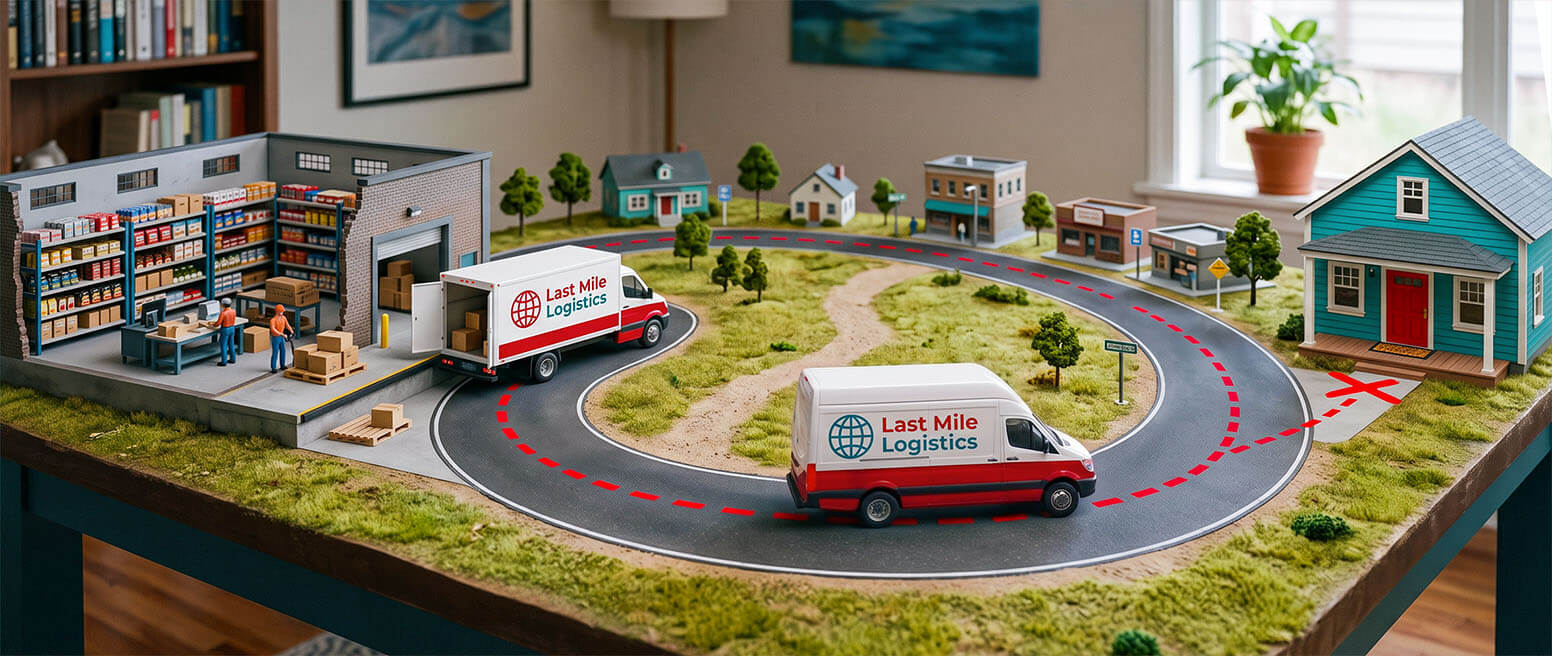
In a dropshipping arrangement, a merchant sells products online without holding any inventory. When a customer places an order, the merchant forwards it to a supplier — a manufacturer, wholesaler, or distributor — who ships the product directly to the customer. No warehouse. No stocking decisions. No boxes in a garage.
Three parties are involved in every transaction. The merchant operates the storefront: setting prices, collecting payment, running marketing, and managing the customer relationship. The supplier handles the physical side: inventory, packaging, shipping, and fulfillment logistics. The customer deals exclusively with the merchant — the supplier is typically invisible to them.
The critical concept here is "seller of record." In a dropshipping arrangement, the merchant is the seller of record. That means they own the transaction in every sense: they set the price, collect the revenue, bear responsibility for sales tax compliance, and own whatever happens after the sale. The supplier’s name doesn’t appear on the packing slip. The merchant’s does.
This isn’t a new model. Catalog retailers in the 1960s and 1970s — Sears, JCPenney — used the same approach, routing mail orders to manufacturers for direct shipment. What changed is the internet making it accessible to individual merchants with no infrastructure requirements beyond a website. The global dropshipping market is expected to reach $476 billion in 2026 (Statista). The appeal isn’t hard to understand.
What that appeal actually includes — and, just as importantly, what it doesn’t — is what the rest of this guide covers.
A dropshipper is considered the merchant of record during a transaction. That means they’re legally and financially responsible for the transaction and everything that flows from it.
How Does Dropshipping Work?
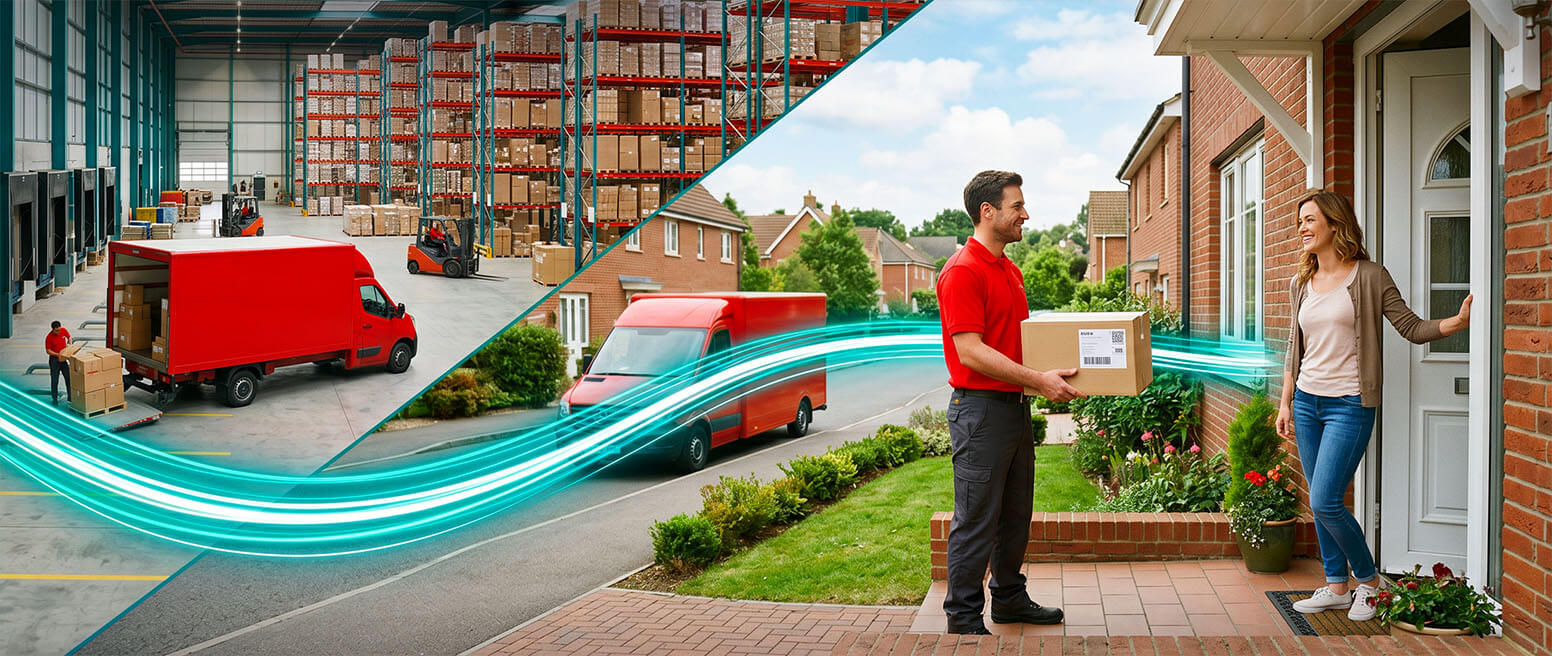
The dropshipping order flow moves from customer purchase to merchant order forward to supplier shipment; a process the customer never sees. Merchants control the front end and suppliers control everything after the order is placed.
The order flow in a dropshipping business is straightforward. The complexity lives in what happens when something goes wrong. But let’s start with the baseline.

Customer Places an Order
A customer visits your online store, selects a product, and pays your listed retail price. The transaction processes through your payment system, and you collect the revenue.

You Forward the Order to Your Supplier
You send the order details — item, quantity, shipping address, and so on — to your supplier and pay the wholesale price. The difference between the retail price and the wholesale price, minus overhead, is your gross margin.

The Supplier Fulfills & Ships
The supplier picks, packs, and ships the order directly to your customer. The packing slip shows your business information, not theirs. From the customer’s perspective, it looks just as if the order came from you directly.

The Customer Receives the Order
If everything goes according to plan, your customer gets their product, your supplier gets their wholesale payment, and you keep the margin.
Most major eCommerce platforms — Shopify, WooCommerce, BigCommerce — offer native integrations with dropshipping suppliers that automate order forwarding, reducing the manual work significantly at scale.
Now… about that margin.
The simplified math often looks compelling: buy at $15, sell at $50, keep $35. In practice, advertising costs, platform fees, apps, and chargebacks compress that number considerably. The real figure is typically $3–8 per sale on a $50 product. Workable at volume, but not the $35 the simple example implies. More on this shortly.
In the example above, the difference between the retail price of the goods and wholesale price (minus any overhead costs) is the dropshipper’s profit.
Why Dropshipping Attracts Entrepreneurs
Dropshipping eliminates upfront inventory investment, warehouses, fulfillment overhead, and risk of unsold stock. The model is efficient for merchants who want to focus on marketing and brand-building rather than logistics.
Let’s give credit where it’s due: the advantages of this model are genuine.
The core appeal is the absence of inventory risk. That’s a major benefit; after all, here’s what dropshipping removes from the equation:
- No upfront inventory investment. Products aren’t purchased until there’s an existing order to fill. A storefront is essentially all the infrastructure you need to get started.
- No warehouse overhead. There’s no storage space, no stocking costs, no packing supplies, and no fulfillment staff.
- Unlimited virtual shelf space. You can list as many products as your supplier carries. If a shirt comes in 14 colors, all you need is 14 product photos.
- No unsold inventory risk. A product doesn’t sell? Simply stop listing it. No clearance pricing, no write-offs, no physical space occupied by slow-moving merchandise.
- Location independence. A dropshipping business can be run from anywhere with reliable internet. Your supplier handles logistics; you handle the storefront.
- Easy scalability. Growth doesn’t require proportional increases in warehouse space, fulfillment staff, or operational complexity.
These advantages suit entrepreneurs who are stronger in marketing and brand-building than in logistics and operations. And, they offer an accessible entry point for first-time eCommerce merchants who aren’t ready to commit capital to inventory. Established retailers also use the model strategically, testing new product categories without inventory commitment before deciding whether to stock them.
The model is efficient. No doubts about that. The question is what you’re trading for that efficiency.
How Much Do Dropshippers Actually Make?
First-year stores typically net less than $2,000 per month. Merchants who survive past 18 months tend to do significantly better.
Most dropshipping guides illustrate earning potential with global market size figures. Those numbers are real. They’re just not what individual merchants earn.
Here’s a more realistic cost structure for a typical sale:
- Product cost to supplier: 30–50% of revenue
- Advertising: 20–40% of revenue when scaling
- Advertising: 20–40% of revenue when scaling
- Returns and chargebacks: 2–5% of revenue
- Apps, tools, domain: allocated per order
This is where that figure of $3–8 in profit per $50 sold that I mentioned earlier comes from.
Dropshipping business models can complicate returns and refunds.
This may lead to an increase in chargebacks. We offer proven strategies for more effective management.
Request a Demo
The average dropshipper can earn $1,000 to $2,000 monthly in their first business year. That’s not accounting for ad spend, platform fees, returns, chargebacks, and the cost of time. Given that about 90% of new dropshippers exit within the first year, the most common issue here is that sellers underestimate costs and overestimate the speed of results.
A lot of merchants who survive past 18 months report median annual net profits as high as $50,000. Top performers — roughly the top 25% of stores still operating after two years — report $80,000–$150,000+ annually, on average. The difference between those outcomes isn’t luck. It’s product selection, supplier reliability, and marketing efficiency.
Two additional realities shape the current environment:

Shipping Expectations

Tariff Volatility
The honest answer to "is dropshipping worth it?" is that the model works — but it works like a real business, not a passive income shortcut. The gap between stores that thrive and stores that quietly close after three months has widened as the market matures.
The Problem With Dropshipping That No One Talks About
If your supplier makes a mistake, the customer comes to you, not them. You are the seller of record, which means you absorb the chargeback, and the resulting fee, regardless of who caused the problem.
Let’s talk about the part most guides gloss over. With dropshipping, you outsource fulfillment. You do not outsource accountability.
The customer bought from you. Your name is on the packing slip. Your business is what shows up on their credit card statement. When something goes wrong — and with any supplier, something eventually will — they come to you. Not your supplier. You.
The three scenarios that generate the most dropshipping chargebacks include:
Shipping Delays
Your supplier falls behind, loses a shipment, or experiences a fulfillment backlog. The customer placed an order ten days ago and has heard nothing. They call their bank and file a "merchandise not received" dispute. You had no visibility into the fulfillment problem until the chargeback notification arrived.
Wrong or Damaged Items
Your supplier ships the wrong size, wrong color, or a defective product. The customer contacts you. You contact the supplier. Resolution takes days or weeks; time the customer isn’t willing to wait. They file a "not as described" dispute while you’re still waiting for your supplier to respond.
Quality Mismatches
Product photos looked one way; what arrived looks different. Particularly common with overseas suppliers where quality control is inconsistent. The customer disputes the charge, correctly noting the item doesn’t match the description.
In all three cases, the chargeback comes to you. The chargeback fee comes to you (typically $20–$100 per dispute depending on your processor). The merchandise is usually gone. And you’re liable regardless of whether the fault was yours or your supplier’s.
The compounding risk operates at the account level. Card networks monitor dispute rates: Visa’s standard threshold is roughly 0.9% of monthly transaction volume; Mastercard’s is 1.5%. A supplier with consistent quality or shipping problems can push you there quickly. If dispute rates exceed these levels, your payment processor may freeze your funds, place you in a monitoring program, or terminate your account entirely.
Merchants can lose $4.61 for every dollar disputed by customers. To put that in concrete terms: at 15% margins, a single chargeback on a $100 item requires approximately 31 successful sales of equal value just to break even. A pattern of supplier-driven chargebacks can become existential faster than most merchants expect.
Dropshippers are also more frequently targeted by fraudulent buyers who understand that card-not-present transactions are easier to dispute. And that dropshippers, with limited visibility into fulfillment status, are harder to defend against “item not received” claims.
How to Evaluate a Supplier
The wrong supplier will generate chargebacks you can’t prevent and disputes you’ll struggle to win. The evaluation questions that matter most are about accountability and error handling, not just price and catalog size.
The most consequential decision a merchant makes is supplier selection. Most people treat it as a logistics and cost decision. It should be treated as a risk management decision first and a logistics and cost decision second.
Here’s what actually matters during evaluation:
Suppliers who resist written agreements, who can’t produce performance data, or whose pricing is so far below market that quality shortcuts are the only plausible explanation. A supplier who seems too good to be true is a chargeback waiting to happen.
Dropshipping is convenient...
...but may raise your chargeback risk. Our professionals can help you weigh your options.
Request a Demo
How to Protect Your Business from Dropshipping Chargebacks
A meaningful portion of dropshipping risk is manageable through accurate listings, clear communication, and a refund process that’s easier than filing a dispute.
Chargebacks hit dropshipping merchants harder than most because the merchant’s control over the customer experience is limited while their liability for that experience is complete. Closing that gap requires systems that intercept problems before they reach the card network.
What does that look like? Well, you can start by checking off all of the following items on this list:
“Not as described” is one of the most preventable dispute reasons. If your product photos or descriptions don’t accurately reflect what your supplier actually ships, every sale carries dispute risk. Request samples before listing products, and update listings immediately when you become aware of quality discrepancies.
A customer who expects two-day delivery and receives their order in 12 days is a chargeback risk. State your fulfillment window clearly on the product page and at checkout. Customers who know what to expect generally don’t dispute deliveries that match those expectations.
A standard workflow of order confirmation, shipping notification with tracking, and delivery confirmation eliminates most “I have no idea where my order is” disputes before they start. Customers who are kept informed don’t call their bank.
This is the most effective chargeback prevention asset available to any merchant. Make it simpler for a dissatisfied customer to resolve the issue with you than through their bank. A clear, visible, frictionless return and refund policy routes complaints through your process — where they cost you a bit of sales revenue — rather than the card network, where they cost you the product, a fee, and a mark against your processing record.
Order details, supplier communications, shipping confirmations, customer service interactions — this is your evidence package if a dispute is filed. In the supplier-error scenarios most common in dropshipping, your documentation needs to demonstrate that you fulfilled your obligations and the problem originated in the supply chain.
You may not be able to prevent a supplier-caused chargeback from hitting your account, but a contract that specifies supplier liability for their own errors gives you recourse to recoup the loss. Most off-the-shelf supplier agreements don’t include this by default, so it’s worth adding before your first sale.
To be clear: even a well-run dropshipping operation will see chargebacks. The goal is to keep them below the card network thresholds, resolve them when they occur, and build the documentation habit that makes winning disputes possible.
When chargeback volume climbs despite prevention efforts, pattern recognition matters. Multiple disputes traced to the same supplier, same product, or the same fulfillment window point to a systemic problem that needs to be addressed at the source — not managed dispute by dispute. At that point, a comprehensive chargeback management strategy that addresses patterns, representment, and the supplier relationship simultaneously becomes necessary to protect both revenue and your processing account.
FAQs
What is dropshipping?
Dropshipping is a retail fulfillment model in which a merchant sells products online without holding inventory. When a customer places an order, the merchant forwards it to a supplier, who ships the product directly to the customer. The merchant sets prices, collects payment, and is responsible for the customer relationship. The supplier handles storage, fulfillment, and shipping.
Is dropshipping legal?
Yes. Dropshipping is a legal fulfillment method in the US and most countries, provided merchants comply with applicable business registration, tax, and consumer protection laws. As the seller of record, the merchant bears legal and financial responsibility for the transaction regardless of which party fulfills it.
Who handles customer returns in a dropshipping business?
From the customer’s perspective, the merchant handles returns. The customer contacts the merchant, not the supplier. Whether the merchant can then recoup the cost from the supplier depends on what the supplier agreement specifies. Establishing clear written return liability terms before your first sale is one of the most important steps a new dropshipper can take.
Can chargebacks from supplier mistakes get my payment account shut down?
Yes. Card networks monitor dispute rates by merchant account. If your chargeback rate exceeds monthly thresholds, you may be placed in a monitoring program, face increased processing fees, or have your account terminated, regardless of whether the chargebacks resulted from your supplier’s errors rather than your own. The rate is measured against your account because you are the seller of record.
How is dropshipping different from third-party fulfillment (3PL)?
In dropshipping, the merchant doesn’t own the inventory; the supplier does, and ships directly under the merchant’s brand. In third-party fulfillment, the merchant purchases inventory, which a fulfillment center stores, packs, and ships on their behalf. 3PL gives merchants more control over product quality and the customer experience but requires upfront inventory investment. Dropshipping requires less capital but provides significantly less control over what the customer actually receives.