



You Can Remove Checkout Friction Points, but be Careful: Checkout Can be too Smooth.
Search for advice on checkout friction and you’ll find near-total agreement: friction is the enemy.
Strip it out. Fewer fields, fewer steps, fewer interruptions between the buyer and the button. Most of that is correct… but a checkout optimized purely for speed carries two distinct costs that no one is really accounting for.
It removes the verification steps that help avoid losses if a transaction turns out to be fraudulent. And, it can move so quickly that the customer never registers what they bought, from whom, or under what terms.
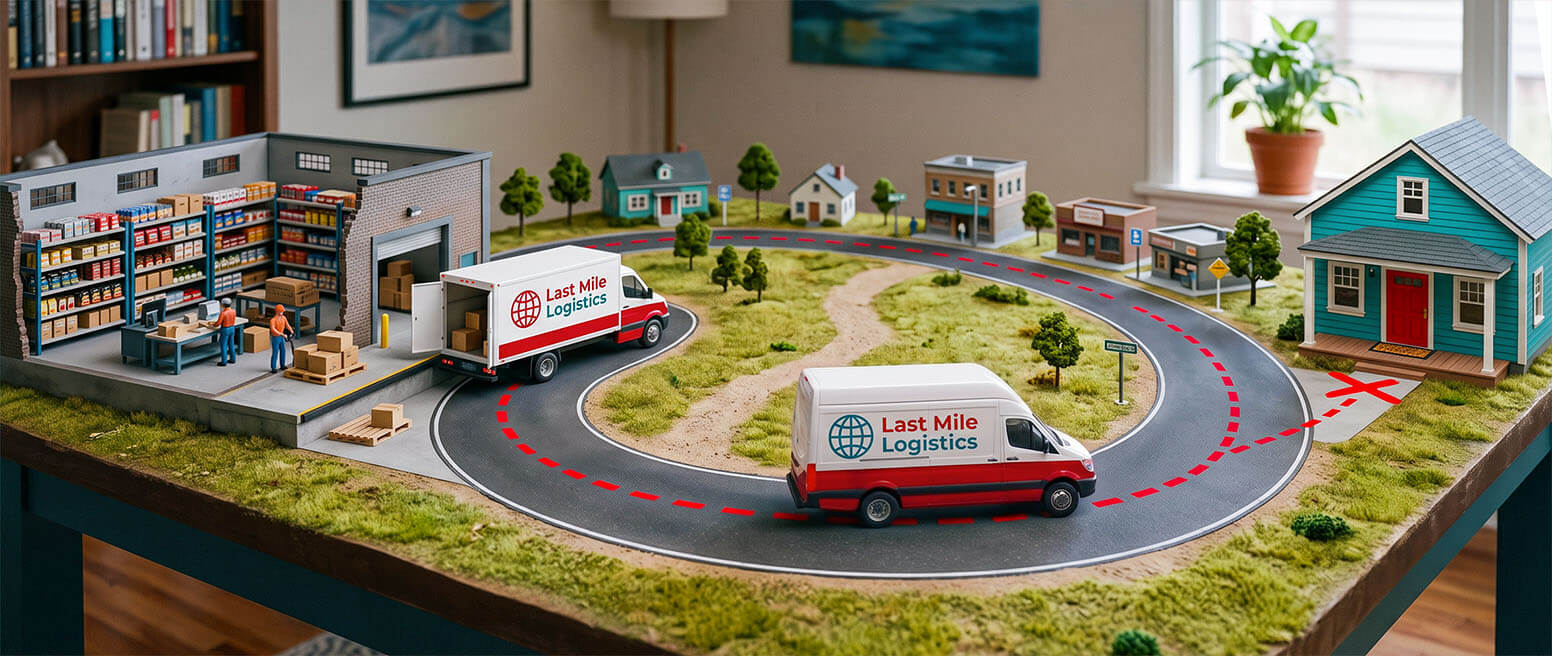
The sale registers this month. But, the dispute lands next quarter, and it costs substantially more than what the initial sale was worth.
So, I wanted to take a few minutes today to talk about checkout friction — what it is, where you can cut it out of the checkout process… and maybe also a few points at which trying to minimize friction might be the wrong move.
Recommended reading
- Top 15 Customer Returns Reasons in 2026 & How to Avoid Them
- Top Business Challenges Facing SMBs in 2026
- Order Fulfillment: Strategy, 2026 Checklist & Best Practices
- eCommerce Return Rate: 5 Steps to Keep Refunds in Check
- What is Connective eCommerce | Definition, Costs & More
- Best eCommerce Platforms: Compared & Ranked for 2026
What is Checkout Friction?
- Checkout Friction
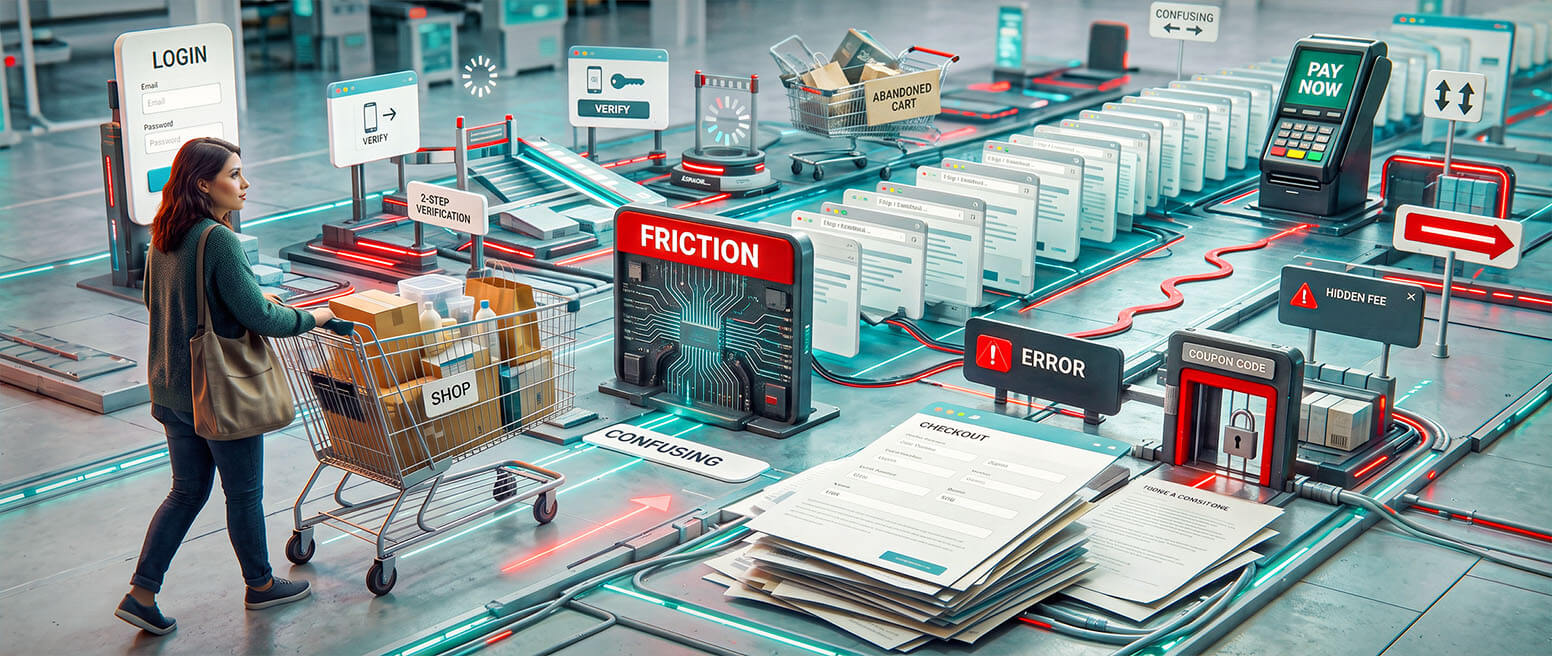
Checkout friction is any element of the payment process that slows a buyer down, potentially preventing a purchase from being completed. Friction can arise due to design or technical failures, or it can be a deliberate security control.
[noun]/CHek • out • frik • shən/
Blanket advice to remove friction at all points leads people astray. You have to distinguish between friction that has no practical benefit, and friction that helps protect your business and customers.

Negative Friction
Think long forms with unnecessary fields. Forced account creation, surprise shipping costs at the final step, and mobile pages that are slow to load. These are friction points that have no upside; they only cost you. So, you should try to remove them whenever possible.

Positive Friction
Authentication challenges, verification steps, confirmation screens: these are deliberate friction points that earn their place in the process. These will cost you some conversions, but they’ll also buy you liability protection, fraud signals, and the evidence you’ll need if a dispute arrives.
I’ll talk more about positive friction in depth a little later. For now, though, let’s focus on the negative side of friction, since that’s the branch that most people seem to want to know about. And, what better place to start than by asking: what friction points can you actually fix?
Friction is not the same thing as abandonment. The two terms get used interchangeably sometimes, but friction is a cause. Cart abandonment is one of the possible outcomes resulting from friction.
How Much Checkout Friction Can You Actually Fix?
The global average cart abandonment rate tends to hover consistently around 70%. That number gets quoted a lot, as though all those orders represented recoverable revenue that’s just left sitting on the table.
Let me disabuse you of that impression right now: it doesn’t.
42% of US online shoppers have abandoned a cart because they were just browsing or weren’t ready to buy. Think comparing prices, saving items for later, checking what delivery would cost. That portion is not a checkout problem, and no amount of form redesign recovers it. Abandonment that results from browsing is largely unavoidable.
Among shoppers who actually intended to buy something, the leading reason for abandonment is that there were extra costs tacked on that were too high. This is cited by around 40% of shoppers with buyer intent who abandon.
The table below shows other common causes of abandonment, ranked by the percentage of cardholders who say they’ve abandoned an order in the last three months for the given reason:
Not every abandoned cart is recoverable
Many shoppers who abandon were only browsing. Most of what stops the rest is friction you can fix.
Reasons given by shoppers who weren’t just browsing
Checkout Friction Points That You Can Fix
Most of the common causes of cart abandonment are checkout friction points that you can fix. Where do you start, though?
Start with the points I’ve outlined below. These are real opportunities, and the gains are freely available.
Avoid Cost Surprises
Shipping, taxes, and any other fees should appear in the cart before the final step, not after the buyer has committed emotionally and entered their card details. Fully disclose fees, but try to apply as few line-item fees and added costs as possible.
Don’t Force Account Creation
Offer guest checkout. While account history can be helpful for marketing, as well as for dispute evidence in the event of a chargeback, there are other ways to get this information without building a barrier between your buyer and your products.
Form Length & Required Inputs
Try to require as few fields as possible. Enable autocomplete for addresses, correct mobile keyboard types, and working autofill support.
Inline Validations
Mistakes happen when filling out forms. Provide inline validations that explain suspected errors rather than simply flagging the entry as invalid, or clearing the form after a failed submission.
Address Payment Preference Gaps
Payment cards remain the most popular methods for payment. But, they’re not the only options. Offer mobile wallet apps like Apple Pay, as well as BNPL options. If you sell in other regions, research the local methods with which your customers expect to do business.
Avoid Technical Failures
Site errors and crashes account for as much abandonment as checkout length does. That’s a reliability problem, not a design problem; it’s often a lot cheaper to fix the former, rather than the latter.
These are just a few of the common pain points that lead to customer friction. Check out the guide to customer pain points I wrote earlier this year to get a broader look at where customer experience breaks down before and after checkout.
Wallet apps are the rare case where removing friction can actually improve your risk position, rather than worsen it. These apps carry tokenized credentials and device-level authentication. So, catering to buyers that prefer Apple Pay or Samsung Pay at checkout is faster and safer, all at once.
The Friction You Can’t See
This is the part that other guides to checkout optimization usually don’t cover. Ironically, it’s probably the part that’s costing you more than everything above combined.
I’m talking, of course, about false declines.
Let’s say your fraud rules reject a legitimate order. This doesn’t get flagged as an abandoned cart because there was a completed purchase attempt. Nothing flags the false positive as friction, because most tools you’d use to analyze friction are built to detect hesitation; not rejection. The friction was yours, applied at the last possible moment.
| What stopped it | Where the setting lives | What you can change | What it does not tell you |
| Gateway rejection: fraud, risk threshold, address verification (AVS), card code (CVV), or duplicate | Your gateway control panel | The rule, its threshold, and its time window | Whether the order was actually fraudulent |
| Fraud filter hold or decline, for example Authorize.net’s Advanced Fraud Detection Suite | Your filter configuration | Which filters run, and what action each one takes | Which specific signal tripped, unless the tool reports it separately |
| Processor or issuer decline | The issuing bank | Nothing directly. You can retry within the network limits, or ask the customer to contact their bank | The bank’s actual reason. Response codes are frequently generic |
A false decline means you lose the sale. You also damage your relationship with your customer.
32% of customers that get falsely declined will never return to the merchant in question. Even those buyers that come back after getting wrongly declined will tend to spend less over their lifetime than they other would have.
Most buyers will never tell you why the relationship soured; you’re left to try and guess what happened. That silence is why the problem persists. An abandoned cart leaves a trace, but a declined customer might simply leave and never come back.
So, what can you do?
Start by pulling decline rates by issuer and BIN range. Concentration of false declines among one specific issuer usually means a rule problem, rather than a fraud problem. Pull decline rates by individual fraud filter rule, so you can see which rule is doing the damage. Check customer service contacts about failed payments. And watch your approval rate for a full cycle after any rule change.
What Checkout Friction is Worth Keeping?
I said earlier I’d get around to this.
So-called positive checkout friction, or just “good friction,” refers to roadblocks that you deliberately place in the checkout process to create reasonable and purposeful barriers to completing a purchase. Take fraud detection, for example. Screening orders on the backend of a transaction is minimally disruptive for legit customers, but stops the majority of bad actors from being able to complete purchases with stolen cardholder data.
Here are a few more examples of positive checkout friction, and why you should apply them:
Authentication won’t necessarily deter first-party misuse. A cardholder who intends to dispute their own purchase can complete the challenge themselves, then later claim the goods never arrived, or weren’t as described.
How to Tell Good Checkout Friction From Bad Friction
It’s not always easy to discern good and bad friction points. If it were… there wouldn’t be bad friction points.
I’d recommend that you ask yourself three basic questions:
#1 | What Does the Step Accomplish?
Does the friction point in question reduce fraud exposure? Does it shift liability? Does it create evidence or a signal you’d want later?
If you can’t provide an answer for any of those, then you should remove the step in question without hesitation. If the answers are a mix of “yes” and “no,” then you need to evaluate carefully and make a judgement call as to whether to remove it or leave it as is. Proceed to the next question.
#2 | Do the Numbers Add Up?
The value of a single sale is only equivalent to the margin on that sale. A chargeback, however, means you lose the order value, the chargeback fee, and the staff time to handle it. You also take damage to your chargeback ratio. This is why total fraud costs run around $5.13 for every dollar lost.
Run both sides. A change that lifts conversion 1%, while raising your dispute rate by 0.4 percentage points, can be net negative. You won’t discover that from a conversion dashboard. So, measure disputes for a full cycle after any friction change, because the conversion result arrives in days and the dispute result arrives in weeks.
Net result for each month of orders
When each side shows up
#3 | Can You Segment?
The honest answer to most friction questions isn’t “yes” or “no.” Instead, it’s better to drill down and ask “For which customers?”
A returning account with clean history and a matching device has earned frictionless treatment. A first-time, high-value order shipping to a new address has not. Applying the same rule to both populations guarantees you’re wrong for one of them, and usually both.
There’s no reliable “right answer” here. While I can give you ideas for practices that you can implement, the best way to optimize checkout friction is really going to depend on your business, your products, and your target customer. If you’re trying to work out whether your current friction settings are costing you more in declines than they’re saving in fraud, our team can help you read the numbers. Give us a call and learn about our solutions that can help you accept more transactions without accepting greater fraud exposure.
FAQs
What is checkout friction?
Checkout friction is any part of the payment process that slows a buyer down, creates doubt, or prevents a purchase from completing. It includes design problems like long forms and hidden costs, technical problems like site errors, and deliberate security controls like authentication challenges.
How do you reduce checkout friction?
Show all costs before the final step, offer guest checkout, cut required form fields, add inline validation and address autocomplete, support the wallets and payment methods your customers expect, and fix mobile load times and site errors. Before removing a security step, check what it’s protecting you from first.
Is all checkout friction bad?
No. Friction that exists purely because of poor design or bad practices is worth removing. Friction that shifts fraud liability, generates fraud signals, or creates dispute evidence is doing a job, and removing it transfers that risk onto you.
Does reducing checkout friction increase fraud?
It can. Removing authentication keeps fraud liability with you rather than the issuer, and stripping a checkout to a single step leaves fraud screening tools with fewer signals to work with. The goal is applying friction selectively by risk, not removing it uniformly.
What’s the difference between checkout friction and cart abandonment?
Friction is a cause, while cart abandonment is one possible outcome. Friction can also produce a false decline, a completed order that gets disputed later, or a customer who buys once and never returns. Only abandonment appears in a standard abandonment report.
Does one-click checkout cause chargebacks?
It can contribute to them. One-click and stored credentials remove the moment where a buyer confirms what they’re purchasing, which increases disputes from customers who genuinely don’t recognize the charge later. Clear billing descriptors and explicit subscription terms reduce that risk considerably.